.png)

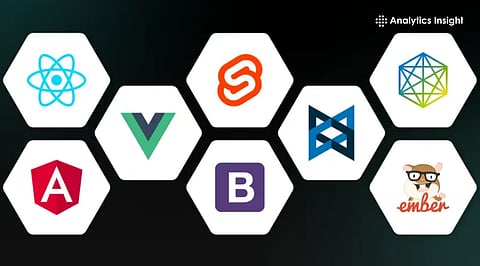
Web development frameworks focusing on performance, scalability, and long-term maintainability will be preferred by developers in 2026.
React with Next.js is the most trusted choice for large and enterprise web development projects.
Nuxt is gaining popularity for content-driven, SEO-focused web applications.
Web development is set to move into a performance-focused, automation-driven phase in 2026. Organizations will prefer frameworks providing high speed, scalability, and ease of long-term maintenance; server-side rendering, edge computing, and TypeScript-first development are already the expected standards
This article explains which web development frameworks will be the best choices in 2026, based on current adoption trends and recent industry direction.
React is a front-end development framework that offers a massive ecosystem and long-term corporate support. It is stable and well-documented, used by millions of developers worldwide. Hiring React developers is comparatively easier than most others - an important factor to consider for large-scale projects.
Next.js complements React, offering features like server components, built-in routing, image optimization, and edge rendering. This makes Next.js a default choice for production-grade applications. Enterprises choose Next.js given it allows building both static and dynamic pages within the same project. This combination is widely used across SaaS platforms, dashboards, and high-traffic websites.
Vue is another popular alternative for teams that prefer a cleaner, more readable syntax. Its single-file components make development easier to understand, especially for designers and junior developers.
Nuxt and Vue can be used together to support server-rendered and hybrid applications. The former is a great choice for content-heavy websites, online stores, and regional business platforms. Companies that want fast development without deep architectural complexity opt for Nuxt; it provides strong SEO performance with a smooth learning curve.
Also Read - JavaScript Frameworks to Learn for Web Development
Svelte stands out as a top pick; it removes most of the runtime work that other frameworks carry by compiling code at build time. Svelte delivers smaller JavaScript bundles with faster load times. These advantages are crucial when performance budgets become stricter in 2026.
SvelteKit turns Svelte into a complete application framework, as it is used more often for consumer-facing apps, startups, and mobile-focused products. High developer happiness scores are already pushing Svelte adoption, especially among teams that want modern features without heavy configuration.
Frameworks like Qwik and Solid are great choices, even if they do not replace mainstream tools. They focus on instant loading and fast interactivity. Qwik’s resumability approach allows pages to load quickly without running large amounts of JavaScript upfront.
Programmers choose these setups for performance-critical workloads like eCommerce storefronts, landing pages with global traffic, and mobile-first applications. As companies keep considering real-world performance metrics over development speed, the adoption rate of these frameworks is increasing dramatically.
Astro is one of the best picks for content-centric websites. Blogs, documentation portals, and marketing sites can use it to ship minimal JavaScript. Astro can be combined with React, Vue, or Svelte components, providing flexibility without sacrificing speed.
Astro’s island architecture helps teams load interactive elements only when it is needed. This approach also improves page speed, reduces hosting costs, and boosts search engine rankings, making it suitable for digital publishers and SaaS companies.
Node.js is usually preferred for the backend runtime of web applications. As edge runtimes and serverless platforms grow rapidly, frameworks in 2026 will be designed to work smoothly across traditional servers and edge environments.
TypeScript is the default language for modern web development. Shipped with most frameworks, it helps reduce bugs while improving long-term maintainability. GitHub activity and developer surveys show TypeScript as one of the fastest-growing programming languages.
Also Read - React vs Angular vs Vue: Best Web Development Frameworks to Explore
AI coding tools may integrate deeply into everyday development workflows. Frameworks with a clear structure can work better with automated code generation and review tools. This can help mature stacks like React, Next.js, and Vue, where patterns are well established. Programmers may also prefer frameworks that simplify testing and validating generated code, pushing teams toward tools with strong documentation.
The best frameworks for web development in 2026 will balance performance, scalability, and developer experience. React with Next.js is the safest choice for large and long-term projects; Vue with Nuxt can help teams that value clarity and speed of development.
SvelteKit and performance-first frameworks can be useful where speed truly matters. Astro is a great choice for content-focused development.
Overall, 2026 will be defined by faster websites, smarter tooling, and frameworks that reduce complexity while delivering strong real-world performance.
1. Which web development framework will be most popular in 2026?
React combined with Next.js will remain the most widely used framework due to its strong ecosystem and enterprise adoption.
2. Why will Next.js be important for future web development?
Next.js will support server rendering, edge deployment, and better performance, ideal for modern web applications.
3. Will Nuxt be a good choice for web development in 2026?
Nuxt will be a strong option for content-driven and SEO-focused websites given its simplicity and performance.
4. Are newer frameworks like Svelte worth considering in 2026?
Svelte-based frameworks will gain adoption for performance-focused projects where faster load times matter.
5. How will web development frameworks change by 2026?
Web development frameworks will shift toward server-first architecture, TypeScript usage, and AI-assisted development tools.
