.png)

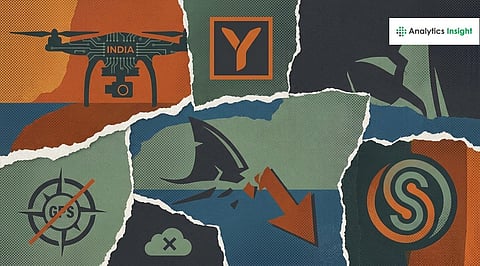
Drone startup Vecros has made a strong comeback after a tough moment on national television. The company has now joined the Y Combinator Startup School India event. This step shows global interest in Physical AI and autonomous drones from India.
Prem Sai and Rajashree Deotalu started Vecros. The startup builds drones that do not need GPS, a pilot, or cloud support. These drones use onboard systems to see, think, and move. This idea is called Physical AI. It helps machines work in real-world conditions.
The journey was not easy. During Shark Tank India, the team showcased their main drone, Athera. The demo did not go as planned. The drone lost balance and crashed during the test. This moment raised doubts among investors and viewers.
The founders explained the issue clearly. The drone was trained for a fixed position. A sudden change confused its sensors. Even after the crash, the technology impressed many. Athera uses eight cameras and a powerful processor. It can handle 21 trillion operations in one second. This helps the drone make quick decisions.
The drone works well in places where GPS is unavailable. These include tunnels, disaster areas, and large industrial sites. It also does not depend on the internet. This makes it useful in critical situations.
On the show, Aman Gupta believed in the idea. He offered a deal that valued the company at 20 crore. This support gave the startup a fresh push.
After the show, Vecros improved its technology. The company moved from testing to real use. Its drones now help in industries like logistics and inspection. The team also built strong partnerships and improved their systems.
In 2026, Vecros reached a big milestone. The startup got selected for the Y Combinator Startup School India event, where around 25,000 startups applied and only 2,000 got selected. This shows strong trust in the startup’s work.
Y Combinator is a well-known startup program. Many big companies started from here. It gives mentorship, support, and global connections. For Vecros, this opens doors to new markets and investors.
The team is now working on growth. They plan to expand their technology and reach global markets. They are also building a new drone called Jasper for small spaces.
Vecros uses two business models. One is direct sales to companies with training support. The other is a service model in which clients can use drones on a subscription basis.
Some challenges still exist. Scaling hardware takes time and cost. Rules for drone use also differ across countries. Big global players are also in the race. Still, Vecros stands out with its GPS-free and cloud-free system.
The story shows strong determination. One failed demo did not stop progress. The Vecros drone startup now stands as an example of growth in Physical AI and autonomous drones.
