.png)

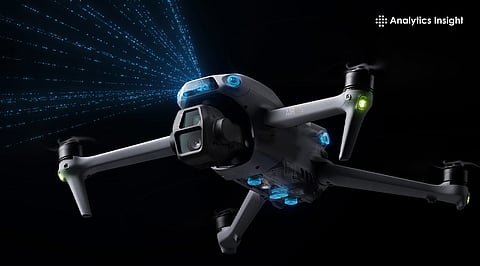
Modern drones use AI and sensors to detect and avoid obstacles automatically, making flying much safer.
Obstacle avoidance is now a must-have feature, especially for beginners and for complex environments.
Choosing the right drone depends on sensor quality, range, and how well it handles real-time detection.
The focus in today’s drone market is on smarter navigation and safer flying. Obstacle avoidance is no longer optional and improves overall flight confidence. Sensors and AI tools work together to track obstacles and reduce reaction times. This helps avoid crashes and keeps footage stable in complex spaces. A strong drone balances detection, camera, and performance, so let’s take a look at the best models in 2026.
This drone combines portability with advanced obstacle detection across all directions. It quickly processes sensor information and updates its movements without delay. Flying feels smooth and controlled, especially in areas with limited space or obstacles. It is a practical choice for users who want confidence while flying. In India, the cost is close to Rs 1,05,000, which reflects the level of intelligence and safety it provides.
Also Read: Top 10 Mini Drones with Camera in 2026
This drone features navigation with multi-directional sensing and stable flight performance. It can efficiently perform forward, backward, and upward detection functions, which are useful in complicated shots. Having two cameras also provides more options for framing content. This drone is a perfect choice for travel creators who want safety and creative control over their content. The average price figure is around Rs 1,25,000 in India.
Automation drives the Skydio 2+, making navigation smooth and efficient. It builds a 3D map while flying and avoids obstacles automatically. The drone tracks subjects by predicting movement and reacting instantly. This makes it suitable for complex environments. The cost in India is around Rs 18,00,000.
This drone is designed to support detailed, high-quality filming work. Its obstacle detection system works alongside advanced sensors to maintain safe flight. Cinematic movements remain controlled and accurate. The multi-camera setup provides flexibility in capturing different perspectives. The price is around Rs 2,70,000, making it suitable for professionals.
A stable flying experience defines the Autel EVO Lite+, especially with its reliable obstacle sensing. It responds well in different environments and avoids obstacles without affecting movement. The ability to perform in low light adds to its practical use. Smooth navigation and controlled hovering make it dependable. The price is usually around Rs 1,45,000.
The DJI Air 2S retains its value through its four-directional sensing capability. While newer drones offer full coverage, this model still handles most situations effectively. The camera quality remains reliable for everyday content. It is a good upgrade choice for intermediate users. The average cost is around Rs 90,000 to Rs 1,00,000.
The DJI Mini 3 Pro continues to be a popular option because of its lightweight build. It features forward and backward obstacle detection to handle basic safety needs. Travel use becomes simple as it is easy to pack and set up quickly. It may not offer high-end safety systems, but it performs well for regular users. The cost usually ranges from Rs 80,000 to Rs 95,000.
This drone focuses on smart navigation and connectivity. It utilizes advanced mapping systems and supports 4G communication for long-term missions. Obstacle avoidance is dependable for enterprise applications. It is meant to be used for inspections and technical work rather than casual flying. Its price is usually Rs 4,50,000 in India.
Also Read: Best Drones with Long Battery Life in 2026
This drone is made for industrial environments with constant obstacles. It navigates tight spaces without manual intervention, thanks to strong AI sensing capabilities. It is commonly used in defense, inspection, and rescue industries. Regular users do not need this level of capability. The price is very high and can be Rs 25,00,000 or more, depending on the configuration.
This is a beginner drone with basic obstacle awareness features. It helps prevent crashes for new users who are still learning to fly. The lack of full sensor coverage is balanced by the obstacle awareness since it provides for safe entry-level use. It is lightweight and simple to control. The price is expected to be in the range of Rs 30,000 to Rs 40,000, which will help beginner buyers.
Obstacle avoidance is no longer a premium feature but a common expectation in 2026. It has a strong impact on flight safety, control, and overall experience. Compact drones now offer full 360-degree sensing, while professional drones combine this with cinematic performance. The right choice depends on usage. Casual users can rely on lightweight models, while professionals should invest in advanced sensing systems.
What is the difference between omnidirectional sensing and multi-directional sensing?
Omnidirectional sensing covers all sides of the drone, including top and bottom, while multi-directional sensing usually covers only front, back, and sometimes sides. Full coverage offers better safety in complex environments.
How do drones detect thin objects like wires or branches?
Most drones struggle with very thin objects because sensors rely on size and contrast. Advanced drones use AI and higher-resolution cameras to improve detection, but it is not perfect.
Can obstacle avoidance work during night flights?
It depends on the sensor type. Vision-based systems may perform poorly in low light, while infrared or LiDAR-based systems handle night conditions better.
Do all drones slow down when obstacles are detected?
Yes, most drones automatically reduce speed when they sense nearby objects. This gives the system more time to react and avoid collisions.
How does AI improve obstacle avoidance in modern drones?
AI helps drones understand patterns, predict movement, and choose safer paths. It allows smoother navigation instead of sudden stops or sharp turns.
