.png)

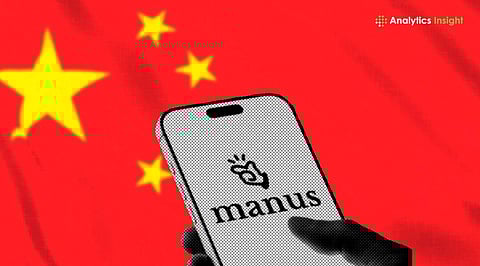
China has blocked Meta’s $2 billion acquisition of AI startup Manus. The latest development highlights the growing regulatory scrutiny and geopolitical tensions shaping the future of global technology deals and AI expansion strategies. Several Media reports have already claimed that China plans to restrict top technology firms, including leading AI startups, from accepting US capital without government approval.
China's state planner has prohibited the foreign acquisition of the Chinese artificial intelligence startup Manus and ordered the parties involved to cancel the transaction, the National Development and Reform Commission said on Monday.
AI startups Moonshot AI and StepFun were among the companies that received the guidance, the report said. Regulators have also imposed similar restrictions on TikTok owner ByteDance and do not want the company to approve secondary share sales to US investors without government approval, it added.
According to a Bloomberg report, Chinese regulators, including the National Development and Reform Commission, have recently instructed several private technology firms to reject US investment in funding rounds unless explicitly approved.
The latest restriction follows Meta's 2025 bid to acquire the AI startup Manus, valued at more than $2 billion. After the bidding news grabbed headlines, it immediately triggered investigations into foreign investments in Chinese companies and technology exports. Chinese authorities were concerned that the deals could spur other startups to move advanced technology offshore.
Meta had earlier stated that the deal would bring a “leading agent to billions of people and unlock opportunities for businesses across our products”.
For years, the US capital has played a major role in China's technology sector, ranging from venture investments by firms such as Sequoia Capital and Benchmark to deep operating ties involving companies like Apple, Microsoft, and Tesla.
American pension funds and endowments have also backed China-focused venture funds, helping fuel growth across internet platforms, electric vehicles, and AI. Washington even imposed its own restrictions earlier this year, limiting US investment in certain Chinese AI, semiconductor, and quantum firms, citing security concerns.
The measures are aimed at preventing US investors from gaining stakes in sensitive technologies linked to China's national security, Bloomberg reported.
Manus, which was launched in Beijing but is now based in Singapore, described the potential deal as “validation of our pioneering work with general AI agents”.
Also Read: Meta's Mandatory Keystroke Tracker Fuels Workplace Trust Crisis
Multiple Chinese regulators had reviewed the deal since January, including the NDRC, the commerce ministry, and China's antitrust watchdog. In March, authorities restricted the departure of two co-founders of Manus. Beijing had previously branded the acquisition a "conspiratorial" attempt to hollow out the country's technology base.
A person briefed on the thinking behind the NDRC statement told the Financial Times the gesture was "pretty harsh and it carries a strong intention to stop follow-on deals [like Manus]. In reality, it's hard to unwind a done deal, so it is more about verbal warnings on similar deals and the leveraging building before the Xi-Trump summit."
The future of cross-border AI investments will depend on how effectively regulatory barriers, geopolitical tensions, and data sovereignty concerns are navigated. Companies should balance global expansion with compliance, forming strategic partnerships and adapting to evolving policies worldwide.
