.png)

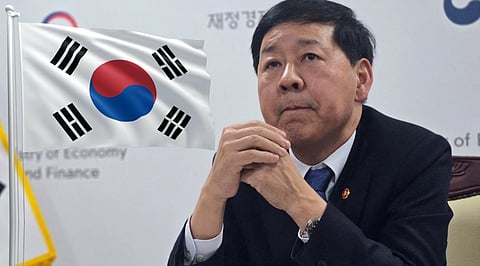
South Korea’s Presidential Policy Chief Kim Yong-beom faces a criminal complaint over the fast approval of leveraged single-stock exchange-traded funds. Former Seoul council member Lee Jong-bae filed the case Monday with the Supreme Prosecutors’ Office, alleging abuse of authority, coercion, and business obstruction. Prosecutors have not announced charges, and the allegations remain unproven.
Lee, who has links to the opposition People Power Party, claims Kim pressed the Financial Services Commission to approve two-times leveraged funds. The products track Samsung Electronics and SK Hynix, which carry major weight in South Korea’s Kospi index.
Kim questioned the domestic ban during a January media interview. He asked why similar products traded on NASDAQ could not enter South Korea and said he had requested a regulatory review. FSC Chairman Lee Eog-weon soon announced plans to permit the funds. Trading began on May 27, less than five months after Kim’s public remarks.
Lee cited an internal FSC document that reportedly scheduled regulatory changes and trading-system development for the second quarter. The document anticipated product launches during the second half of 2026.
The complaint claims officials moved the launch forward despite warnings from regulators, financial companies, and market specialists. It also links the shortened timetable to the period before local elections.
The complaint raises one pivotal question: Did political urgency override safeguards designed to protect investors? Prosecutors must determine whether the evidence supports a formal investigation or criminal charges.
Leveraged single-stock ETFs use derivatives and daily resets to target twice a company’s daily share movement. Gains can increase quickly, while losses can deepen at the same speed. Daily compounding, fees, volatility, and portfolio adjustments can change longer-term returns. Therefore, investors may not receive exactly twice the stock’s performance over several sessions.
The controversy grew after Samsung Electronics and SK Hynix suffered steep declines. On July 29, the Kospi fell nearly 6%, while circuit breakers operated for a second consecutive session. Samsung shares dropped as much as 14%, and SK Hynix fell nearly 20%, despite reporting record earnings. Regulators later acknowledged that leveraged products had increased market volatility.
Also Read: South Korean Chip Stocks Surge on Renewed AI Optimism
Finance Minister Koo Yun-cheol and FSC Chairman Lee apologized for failing to assess the risks carefully enough. Lawmakers from governing and opposition parties also called for a parliamentary investigation. Kim rejected claims that the ETFs alone caused the turmoil. He argued that South Korea’s active retail trading culture also contributes to sharp market moves.
Regulators have halted new listings and raised the minimum cash deposit from 10 million won to 30 million won. They also introduced stronger requirements for firms that support market liquidity. Authorities are considering lower leverage ratios, portfolio limits, and temporary leverage cuts during severe market stress. Prosecutors will decide whether Kim’s conduct justifies further legal action.
The complaint has shifted scrutiny from product performance to regulatory conduct. Prosecutors must now decide whether Kim’s actions crossed legal boundaries, while lawmakers review the approval timetable. Investors also face tighter access rules as authorities assess whether leveraged single-stock ETFs need stronger safeguards before future listings.
