.png)

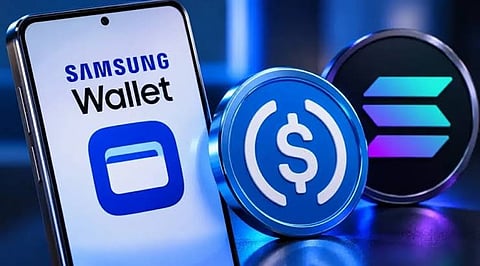
Samsung plans to introduce USDC transfers through Samsung Wallet in the final week of October, extending access to 82 million compatible U.S. Galaxy devices. Eligible users will send digital dollars without installing a separate crypto app, while Solana and Sui provide supporting blockchain infrastructure.
For Solana, the rollout creates a new channel for stablecoin transactions, but it does not establish fresh demand for SOL. Actual payments, repeat usage and transaction routing will determine how much activity reaches the network.
Samsung's announced feature places USDC transfers inside a mobile wallet that Galaxy owners already use. It removes the need for eligible customers to begin with a dedicated crypto application. That may make the payment process simpler, particularly for people unfamiliar with digital wallets.
Still, the 82 million figure measures compatible devices rather than active users. It does not show how many people will enable stablecoin features, send transfers or make payments more than once. Regional rules, service availability and the rollout schedule may further shape adoption.
Samsung expects the service to arrive during October's final week. As access expands, completed transfers will offer clearer evidence than device eligibility. Fees, payment speed and the handling of failed transfers will also affect the consumer experience. None of those outcomes follows automatically from the size of Samsung's device base.
The rollout also offers a way to compare first-time senders with returning users. An initial transfer by itself does not demonstrate sustained regular payment activity.
The Solana Foundation reports that the network processed more than $5.25 trillion in stablecoin transfers during 2026. It also reports that stablecoin supply rose nearly 20% from a year earlier. Those figures show the scale of existing network activity before Samsung's new service.
Yet the volume figure covers the network as a whole, not only payments between consumers. It therefore cannot serve as a forecast of Samsung Wallet remittances. Any assessment of the rollout needs to isolate transactions that come from the new feature.
Samsung's integration could bring USDC transfers to people who have never opened a separate crypto wallet. However, both Solana and Sui support the planned service. The proportion of transfers handled by each network remains central to measuring Solana's share.
Will broader access to USDC create lasting demand for SOL itself?
Solana uses SOL to pay network transaction fees, but those charges remain relatively low. Greater USDC activity may therefore produce more transactions without creating equivalent SOL purchases. Repeat transfers and observable network activity would provide firmer evidence than the announced device count.
Read More: XRP ETF Inflows Resume as Solana Funds Extend Three-Week Losing Streak
A separate route to Solana exposure comes through the Invesco Galaxy Solana ETF. Its prospectus supplement identifies QSOL as a product listed on Cboe BZX. That listing provides an exchange-based channel for investors seeking exposure through eligible investment accounts.
However, access and fresh demand are not identical. Some investors could shift exposure from direct SOL holdings or existing products into QSOL. Such moves may change where investors hold exposure without expanding overall demand for the token.
Likewise, an ETF's assets can rise as SOL's market price changes, even without fresh subscriptions. Sustained net share creations, alongside higher SOL holdings, would provide clearer evidence of additional purchases. Redemptions or limited creations would suggest a weaker demand response.
With October 30 approaching, investors have two distinct developments to assess. Samsung's service could expand stablecoin use, while QSOL offers regulated market access. Neither development alone confirms a breakout or a specific price level.
The available information supplies no verified SOL price thresholds or probabilities for that date. It also contains no published ETF net creation figures, confirmed SOL purchase amounts or Solana's precise share of Samsung-related transfers.
Samsung Wallet's USDC rollout could widen access to stablecoin transfers across eligible Galaxy devices, while QSOL provides another route to Solana exposure. Neither availability nor network volume proves new SOL purchases. Transaction completion, repeat usage, Solana's share of transfers and verified ETF creations remain the clearest measures.
