.png)

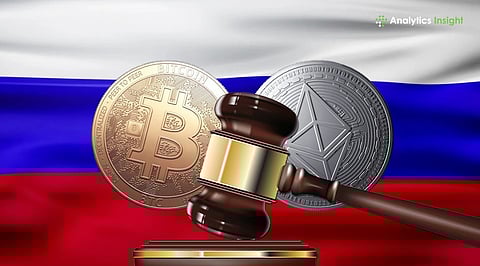
Russians conduct cryptocurrency deals worth about $648 million each day, according to the Finance Ministry. Annual transaction volume exceeds $130 billion, officials said. Deputy Finance Minister Ivan Chebeskov confirmed that crypto usage continues to grow. Authorities now seek to fast-track legislation and bring trading under formal oversight during the State Duma’s spring session.
Ivan Chebeskov stated that millions of citizens participate in crypto trading across Russia. He said those transactions represent trillions of rubles in purchases and savings. Yet he noted that all activity currently occurs in unregulated spaces outside state control.
Therefore, the ministry plans to submit a draft law as early as March. Officials want lawmakers to adopt the bill before July 1. The Finance Ministry and the Central Bank of Russia both support that deadline.
First Deputy Governor Vladimir Chistyukhin also addressed the proposal at the same conference. He said regulators would grant a transition period for market participants. Exchanges and platforms would use that time to secure licenses and prepare compliance documents.
The draft law targets cryptocurrency exchanges and trading platforms. Authorities would impose penalties on operators who fail to obtain permits. At the same time, banks and brokers could offer crypto services under existing licenses. Standalone platforms would require separate authorization.
Senior officials from the Moscow Exchange said they want to compete for a share of the crypto market. The exchange and several major banks confirmed readiness to offer crypto-related services once legislation takes effect.
Supervisory Board Chairman Sergey Shvetsov told Vedomosti that Russians pay about $15 billion each year in commissions to foreign crypto exchanges operating in gray markets. He compared that figure with the exchange’s annual profit of roughly $1 billion.
Shvetsov said recapturing even part of that commission flow into the legal sector could drive significant growth. Russia’s largest stock market now prepares to enter the crypto space under a regulated structure.
Meanwhile, the Chainalysis 2025 report ranked Russia as Europe’s largest cryptocurrency market by transaction volume. The country surpassed the United Kingdom in that metric. At the same time, officials acknowledged that Western sanctions limited access to traditional financial channels, which contributed to rising crypto usage.
Major exchanges in Moscow and St. Petersburg have also prepared to launch regulated crypto trading platforms. They await a finalized legal framework before rolling out services.
Also Read: Russia Weighs Ruble Stablecoin Amid Sanctions Shift: What Does It Mean to Russian Investors?
The Finance Ministry based its transaction estimates on data from Rosfinmonitoring’s Transparent Blockchain platform. That system tracks digital asset flows for anti-money laundering purposes.
Under the proposed framework, regulators would maintain the long-standing ban on using crypto for domestic payments. Authorities would allow trading only as an investment vehicle. In addition, the central bank would determine which assets qualify for legal trading beginning in mid-2027.
Officials also signaled possible restrictions on privacy-focused cryptocurrencies. Regulators would exercise discretion when approving digital assets for licensed platforms.
At the same conference, Chistyukhin outlined plans for market supervision during the transition period. Exchanges and service providers would align internal systems with regulatory standards. Banks and brokers would operate within existing frameworks while expanding into crypto services.
As Russia prepares to shift billions in daily crypto activity into regulated channels, one question remains: can new rules redirect trading from gray markets into licensed platforms without slowing the sector’s rapid growth?
Russia's crypto trading now averages $648 million daily, with annual volumes surpassing $130 billion. The Finance Ministry and Central Bank of Russia aim to pass a State Duma crypto law by July 1 to regulate exchanges, authorize banks, and shift activity from gray markets into licensed platforms.
