.png)

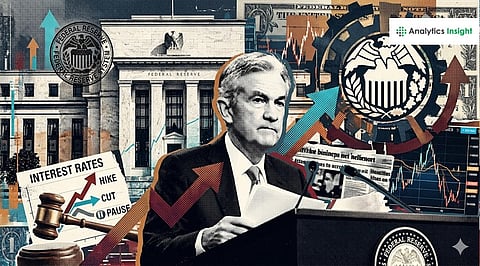
The latest Federal Reserve policy meeting has captured global attention. It comes at a charged moment when inflation is above target, economic signals are pulling in different directions, and markets are hoping for steady hands. The world is watching for a hold.
The stakes extend well beyond the United States. Any pause or pivot in Fed policy ripples through currencies, equities, and bond markets worldwide. Emerging economies like India tend to feel those ripples most acutely.
This FOMC meeting is the last one chaired by Jerome Powell before the leadership changes in June 2026. His four-year term has been marked by crises such as the COVID-19 Pandemic and current inflation. The economic condition is tough. Inflation is rising, and most of the pressure has been coming from the energy sectors. The prices have jumped due to tensions linked to the conflict in Iran. The higher fuel costs are eventually translating into higher transport and food prices.
At the same time, the labor market is standing at a critical point. The hiring section has slowed, and layoffs are picking up pace. The economy is weaker, yet inflation is still too high.
The FOMC Meeting is scheduled for 2:00 PM ET (11:30 PM IST), during which the Federal Reserve will announce its interest rate decision. Powell's speech will be at 2:30 PM ET (12 AM IST). Marketers expect rates to remain unchanged, but Powell’s speech will offer guidance on borrowing costs, stocks, and the broader economy for months to come.
Also Read: Fed Cuts Rates as Policy Debate Deepens Across FOMC, Market Tension Arises
The power is about to shift to the potent successor, expectedly, Kevin Warsh. He is widely seen as the one taking over the chair after Powell’s exit. His confirmation is expected before the June policy meeting.
Warsh isn’t a new person, handling a crisis for the first time. He has served as a governor at the Federal Reserve from 2006 to 2011. During the global financial crisis, he worked closely with then-chair Ben Bernanke. At that time, he served as a key link between the central bank and Wall Street.
His past role suggests a focus on financial stability. So, investors are expecting him to take a steady approach, at least during the early months of his tenure. However, leadership changes often bring new priorities.
A third consecutive pause in interest rate adjustments will have a major impact on India. A stable US interest rate typically strengthens the dollar, which can put pressure on emerging-market currencies like the rupee. This situation may also hinder the Reserve Bank of India from cutting interest rates in the coming months, as lower rates could further weaken the rupee.
Another concern is capital flow. Global investors often redirect their funds to seek higher returns in the United States when interest rates remain elevated. This trend could lead to a decrease in inflows into Indian stocks and markets. Today's meeting will be crucial in determining market direction and currency trends worldwide, with effects expected to ripple from Wall Street to Mumbai.
