.png)

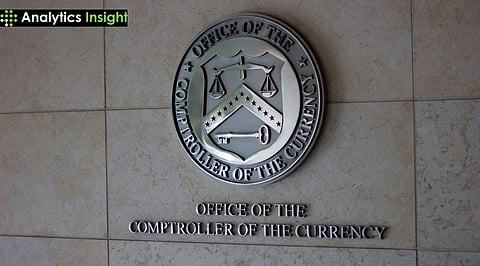
The Office of the Comptroller of the Currency has stated that several major US banks could face penalties after investigators found that some institutions restricted or closed accounts tied to politically sensitive sectors, including cryptocurrency businesses.
The findings came after President Trump ordered a federal review into claims that banks denied services for political reasons rather than legitimate risk concerns, raising a central question: Did large banks wrongly restrict lawful businesses earlier?
The OCC released its investigative report on December 10, 2025. The report answered an August executive order directing regulators to examine alleged politically motivated debanking between 2020 and 2023. Investigators reviewed actions at nine large banks and found repeated service restrictions that affected digital asset firms, oil and gas operators, and private prison companies.
Banks stated that financial crime risks, compliance burdens, and reputational concerns shaped their decisions. Yet regulators found that several banks went beyond legal or supervisory guidelines. Trump described such behavior as the “weaponization of finance” during discussions about the review.
Additionally, the report listed JPMorgan Chase, Bank of America, and Citigroup. It linked each bank to past public policies, particularly environmental commitments that may have influenced account decisions. OCC officials noted that they intend to refer unlawful conduct to the attorney general, although the report did not specify which statutes were violated.
Furthermore, the investigation noted that Trump previously attempted to enforce a rule requiring banks to use objective risk assessments rather than cut off entire business categories. The Biden administration halted that rule in early 2021.
The new report referenced past OCC bulletins and the agency’s effort to remove reputational risk from supervisory frameworks. It also cited Trump’s executive order, which directed regulators rather than banks themselves.
Republican lawmakers and advocacy groups have frequently challenged what they describe as selective debanking. Crypto executives also raised concerns after experiencing account closures during the period under review. Despite these concerns, some analysts said the report did not fully describe all drivers behind earlier debanking trends.
Cato Institute Policy Analyst Nicholas Anthony said the report excluded several well-known causes of debanking. He stated that regulators assess banks on reputation, which may influence internal decisions and compliance actions. His statement reinforced the debate around the role of reputational assessments in account access.
Furthermore, the OCC’s action arrives at a moment of regulatory transition. The agency attempts to balance neutrality requirements for account access with the rising demand for digital asset services nationwide. The recent report plays into ongoing political debates about fairness in financial services.
The warning came one day after the OCC issued new guidance. The guidance, released on December 9, 2025, allowed banks to participate in “riskless principal” crypto transactions. In these transactions, banks buy and sell digital assets for customers without holding those assets on their balance sheets.
This marked a significant shift toward integrating crypto operations into traditional banking systems. It also contrasted with the restrictive approaches that banks applied earlier in the decade. Regulators indicated that this framework aims to help banks serve customers who want direct access to digital assets.
Market reaction showed stability. Shares of JPMorgan, Bank of America, and Citigroup all closed higher on December 10. Investors viewed the enforcement risk as manageable while awaiting more explicit rules for crypto services and account access. This reaction reflected expectations that banks may operate under a new regulatory balance.
As the OCC reviews potential penalties, banks now face revised expectations. They must provide neutral access to lawful industries while preparing to support emerging sectors, such as cryptocurrency, through updated regulatory frameworks.
Also Read: OCC Clears Banks to Hold Crypto for Gas Fees as IRS Eyes Global Oversight
The OCC debanking warning outlines how central US banks restricted access to crypto and other politically sensitive sectors, prompting potential penalties as regulators push for neutral access to accounts. The review and new crypto guidance signal a shifting framework that banks must navigate as they prepare for clearer federal expectations.
