.png)

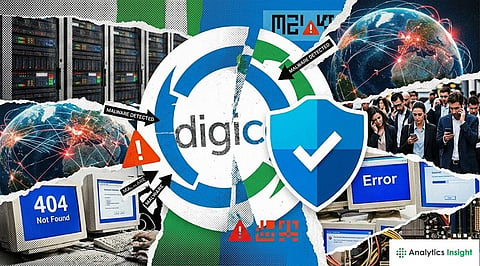
A routine security update turned into a global concern after Microsoft Defender mistakenly flagged trusted digital certificates issued by DigiCert as malware. The error, triggered by a faulty intelligence update on May 3, rippled across corporate networks and personal systems, briefly breaking the chain of trust that keeps the internet secure.
The issue began when Defender identified legitimate root certificates as a threat labelled ‘Trojan:Win32/Cerdigent.A!dha.’ These certificates are not obscure components.
These certificates underpin how devices authenticate secure websites, validate software downloads, and enable enterprise systems. Systems that received the update began quarantining or removing them, a step that triggered significant and widespread consequences.
Users and IT teams reported a sudden wave of problems. Secure websites refused to load. Applications that depend on certificate validation stopped working. Software updates failed. Internal enterprise tools struggled with authentication.
The disruption spread quickly as Defender updates rolled out automatically across millions of devices. Within hours, organisations across regions found themselves troubleshooting what looked like a cyberattack but turned out to be a misfire from a trusted security layer.
For many administrators, the challenge lay in identifying the cause. Few expect security software itself to become the point of failure.
Microsoft acknowledged the issue and released corrected security definitions soon after. Updated versions stopped the false alerts and, in several cases, restored the affected certificates automatically.
System administrators were advised to update Defender immediately and check whether any certificates had been removed during the window of the glitch.
Also Read: Microsoft Raises Alarm Over WhatsApp Malware Exploiting User Trust
Microsoft Defender glitch highlights how much modern computing depends on systems users rarely see. Root certificates operate quietly in the background, enabling encrypted connections and verifying identities online. Their sudden removal did not just create minor bugs. It disrupted the basic ability of systems to trust websites and software.
Security tools now hold deep control over devices and networks. Errors at that level can scale as quickly as real threats. For enterprises, automated protection remains essential, but so does visibility and the ability to respond quickly when trusted systems behave unexpectedly.
