.png)

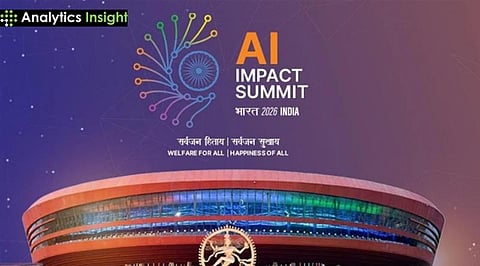
India has formally invited China to participate in its AI Impact Summit 2026, a weeklong event in New Delhi. This is the first time India has welcomed China as a partnering country to its premier AI event. The move reflects New Delhi’s effort to position itself as a facilitator in global AI governance.
The summit is scheduled from February 15 to February 20, 2026, and 100 countries are expected to participate in the mega event.
The Secretary of the Ministry of Electronics and Information Technology (MeitY), S Krishnan, confirmed that a formal invitation has been sent to China. While countries, like France, have already accepted the invitation, India awaits a response from China.
The invitation follows China’s participation at the 2025 AI Action Summit in France, co-chaired by India. This event was held months after the Asian tech giant declined to sign on as a sponsor of the 2024 AI Summit in Seoul, South Korea.
China’s growing influence in artificial intelligence, through cost-efficient models such as DeepSeek and Qwen, has drawn global attention. However, limited adoption and citations have constrained the country’s enterprise-level uptake.
Also Read: AI Policies Compared: How India, the U.S., and China Shape the Future of Artificial Intelligence
MeitY’s secretary, S Krishnan, said that over 50 heads of state are expected to attend the Summit. Prime Minister Narendra Modi will host a welcome dinner for the dignitaries in New Delhi on February 18.
“We have also received confirmations from executives from the AI world, including Bill Gates, Dario Amodei of Anthropic, Demis Hassabis of Google DeepMind, and more. Having large tech firms make key announcements will be an important part of the Summit, even if that wouldn’t be the main focus,” the MeitY secretary added.
India hopes the AI summit will culminate in a definitive policy declaration on AI regulation. It also aims to showcase foundational models developed by startups supported under the National AI Mission. The summit also aims to advocate a collaborative, consensus-driven approach to global AI governance.
