.png)

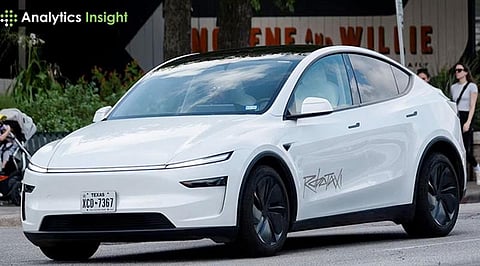
Tesla executives chose Christmas Eve to share their personal experiences of traveling in Robotaxis. The cars were unsupervised, with autonomous driving modes operating without a safety driver or monitor.
Elon Musk and Ashok Elluswamy, Tesla’s AI Director, posted their experiences driving autonomous vehicles on public roads in Austin. This move shows the makers’ confidence in their product.
According to Musk, he personally drove a Robotaxi without a safety manager and reported that his experience was smooth and flawless. “A Tesla with no safety monitor in the car and me sitting in the passenger seat took me all around Austin on Sunday with perfect driving,” he wrote on his X post that attracted massive attention.
His statement came after several videos showing Teslas driving through Austin with no one inside went viral. Elon Musk confirmed that the company was testing autonomous driving.
Elluswamy further pushed the boundaries by uploading a two-minute video recorded from the rear seat of an unmanned Tesla vehicle. The footage showcased empty seats at the front of the car as it cruised through traffic without human input, taking smooth turns and adhering to traffic regulations.
Ashok described his experience as ‘amazing’ and provided valuable visual proof that Tesla’s autonomous driving software works effectively in unsupervised conditions.
During the first half of the month, at an xAI hackathon, Musk said Tesla was almost ready to eliminate the safety monitors in its Robotaxi service in Austin. “‘Unsupervised’ is pretty much solved at this point. So there will be Tesla Robotaxis operating in Austin with no one in them. Not even anyone in the passenger seat in about three weeks,” he noted.
Musk mentioned these timelines again during Tesla’s 2025 Annual Shareholders Meeting and its Q3 earnings call, making it clear that the company is eager to move beyond supervised testing.
Also Read: Elon Musk Mocks Waymo After Robotaxis Stall in San Francisco Blackout
Although Tesla’s robotaxi network has been active for only the past year, it marks a rapid advancement in the fully autonomous driving sector. The successful testing in Austin might push regulators to rethink the rules around autonomous driving on public streets.
