.png)

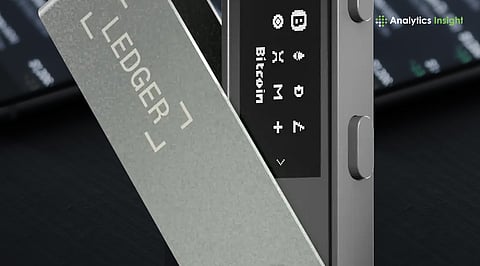
Ledger has expanded secure access to decentralized trading through a new OKX DEX integration inside its wallet ecosystem. The hardware wallet maker said users can now execute cross-chain swaps directly from Ledger Wallet while keeping private keys offline. The move allows customers to access aggregated liquidity across multiple networks without leaving the wallet interface. The rollout forms part of Ledger’s broader strategy to position its software as a secure gateway to decentralized finance tools.
The company announced the integration on its official blog on Tuesday. It said the feature connects Ledger Wallet users to OKX DEX’s multichain aggregation engine. As a result, traders can route swaps across supported EVM networks while maintaining self-custody. Ledger confirmed that private keys remain secured within its hardware signer during each transaction.
The update follows several wallet upgrades unveiled at Ledger Op3n in 2025. Those updates aim to expand access to swaps, yield strategies, and decentralized applications from within the same secure environment.
Trading in DeFi often requires switching between platforms and bridging assets manually. That process can increase friction and introduce operational risk. With the OKX DEX integration, Ledger Wallet now acts as a unified access point for multichain swaps.
OKX DEX uses liquidity aggregation to scan hundreds of sources and identify optimal pricing. The system seeks to minimize slippage by routing trades across multiple liquidity pools. Through its X-Routing technology, the aggregator splits and directs transactions across Ethereum, Polygon, Base, Optimism, BNB Chain, and Arbitrum.
Users initiate swaps directly inside the Ledger Wallet app. First, they verify and confirm the transaction on their Ledger hardware device. Then, they select the Swap section and choose OKX DEX as the provider. Before final confirmation, the interface displays aggregated rates from various liquidity pools.
Ledger stated that the integration aligns with the principle of self-custody. Users trade directly from their Ledger Wallet, and private keys never leave the hardware signer. This design allows customers to access decentralized markets without transferring assets to external platforms.
Jean-François Rochet, Ledger’s executive vice president of consumer services, said the integration connects OKX with security-focused users. He added that it gives Ledger customers access to competitive exchange pricing within a hardware-secured setup.
The company noted that additional usability improvements will accompany the rollout. For many Ledger users, accessing DeFi previously required extra steps and unfamiliar interfaces. Now, they can route trades through OKX DEX within the same app where they store assets.
Read More: BTC Mirrors Past Cycles as $35K Risk Reenters the Spotlight
The OKX DEX integration follows earlier expansions in Ledger’s DeFi offerings. Over the past two years, Ledger integrated Exodus’s XO Swap aggregator to enable non-custodial token swaps across thousands of pairs. It also introduced a bitcoin yield product in partnership with Lombard and Figment.
Moreover, Ledger added stablecoin yield features through Kiln. These integrations aim to consolidate decentralized services within a single secure wallet interface. Can secure hardware wallets become the main gateway to on-chain markets?
Ledger reported that it has sold more than 8 million devices worldwide. The company also claims its products secure over 20 percent of global crypto assets. By adding OKX DEX, Ledger provides its user base with direct access to multichain liquidity while maintaining hardware-level security.
The integration marks another step in combining professional-grade security tools with decentralized trading functions inside one wallet application.
Ledger has integrated OKX DEX into Ledger Wallet to enable secure multichain swaps with aggregated liquidity. Users can execute cross-chain trades while keeping private keys offline in their hardware wallet. The update expands in-wallet DeFi access and strengthens Ledger’s position as a secure gateway to decentralized trading tools.
