.png)

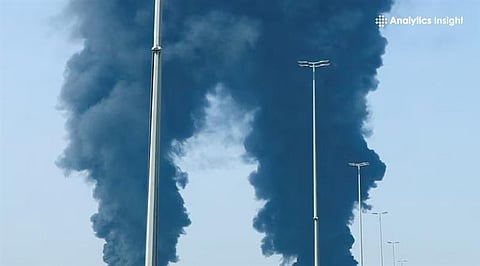
Oil loading operations at the United Arab Emirates’ Fujairah port have been suspended again after a drone attack caused a fire on Monday. The port is a major bunkering hub and export terminal, handling nearly 1 million barrels of Murban crude daily (approximately 1% of global oil demand). Authorities confirmed that civil defense teams are working to control the blaze, and no casualties have been reported.
This is the second attack on Fujairah. The port had resumed operations on Sunday following a separate drone strike over the weekend. The repeated attacks have already affected shipping through the Strait of Hormuz, a narrow route that supports about 20% of the world’s oil supply.
The port holds a commanding position, located outside the Strait of Hormuz. This allows the United Arab Emirates to export oil without relying completely on the narrow shipping route. The route experiences interruptions when conflicts occur in the area.
The 370-kilometer pipeline transports crude oil from the UAE's inland oil fields to the Fujairah port. The system enables the country to maintain its export activities when shipping through the Strait of Hormuz is restricted.
The United States and Iran are experiencing rising tensions, creating an environment for a counter-attack. The ongoing conflict has already reduced Middle Eastern oil production by more than 7 million barrels per day, accounting for 7% of the global oil supply.
Iran has issued a warning about attacking other UAE ports. The report states that Tehran has asked its residents to avoid areas near major ports, including Jebel Ali in Dubai, Khalifa Port in Abu Dhabi and Fujairah.
Fujairah, a vital energy hub for international oil trade, is facing heavy pressure due to the current situation. The ongoing conflict has pushed oil prices to nearly $100 per barrel. The United Arab Emirates will need to reduce its offshore oil production if the current situation continues.
The Trump administration must safeguard these shipping routes as growing public pressure demands action. The IEA has announced plans to release a record 400 million barrels from its reserves. The package, which contains 80 million barrels from Japan, will help reduce the impact on global oil prices.
Fujairah is one of the Middle East’s most important energy hubs. The facility functions as a central point that handles fuel storage and export activities while providing ship fuel supplies to international shipping routes.
While the temporary resumption of operations provides some relief to global energy markets, analysts warn that the situation is uncertain. Ongoing geopolitical tensions and repeated drone attacks in the region could potentially worsen the situation.
