.png)

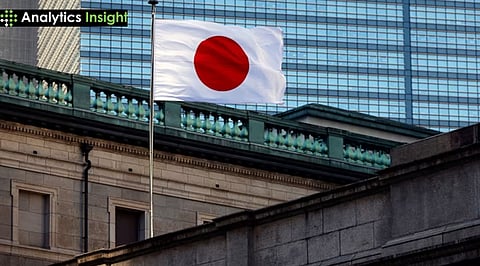
The Bank of Japan is set to keep its benchmark interest rate at 0.75% after its two-day meeting, as markets expect a pause following December’s increase. Policymakers raised rates to a three-decade high last month. The move marked a shift toward policy normalization after years of ultra-loose settings.
A pause allows officials to study economic effects before further action. Markets now await guidance from Kazuo Ueda on future steps. Governor Ueda is expected to restate the BoJ’s gradual tightening approach. Investors will parse his press conference for clues on timing and pace.
Markets largely rule out a back-to-back hike. Still, meeting minutes show some policymakers support further tightening due to deeply negative real rates.
Will clearer signals on future hikes steady the yen after weeks of weakness tied to politics and global uncertainty?
Political uncertainty rose after Prime Minister Sanae Takaichi called snap elections. She also proposed a two-year suspension of food and beverage taxes. The plan aims to ease household inflation pressures. Its effect on monetary policy remains uncertain at this stage.
Meanwhile, long-term yields reached record highs. Concerns over public finances continue to weigh on the yen.
In Asia, Japan’s Nikkei 225 gained 0.3% to 53,846.87 after the BoJ held rates and lifted inflation and growth forecasts. Chinese markets posted modest gains. Hong Kong’s Hang Seng rose 0.5%, while Shanghai’s Composite added 0.3%.
South Korea’s Kospi climbed 0.8% to 4,990.07. The index had crossed 5,000 a day earlier before retreating. European markets traded mixed at midday. Germany’s DAX edged up 0.1%, while France’s CAC 40 slipped 0.3%.
In the United States, Intel shares dropped 13%. The chipmaker beat profit expectations but warned about supply constraints. Energy markets calmed after earlier volatility. Natural gas prices eased following a spike tied to an incoming winter storm.
Read More: Bitcoin Rebounds to $84K Despite $479M in ETF Outflows, BoJ Policy Shift
The yen weakened after election speculation surfaced. Recent sessions brought slight stability due to U.S. dollar softness. Dollar pressure followed remarks by Donald Trump on Greenland and EU–U.S. trade tensions, though no agreement has been signed.
Even so, USD/JPY remains about 0.7% higher this year. It trades near last week’s 18-month high around 159.50.
The Bank of Japan kept rates at 0.75%, as expected, while signalling a cautious path toward further tightening. Markets focused on yen movements, political uncertainty and global risks. Clear guidance on future hikes remains key as investors track currency stability and policy direction.
