.png)

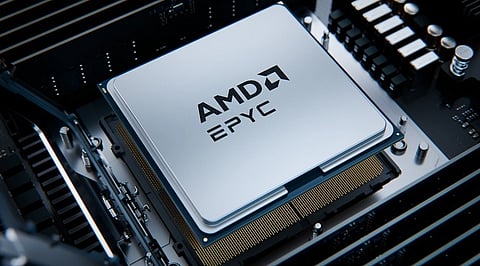
AMD has introduced its 6th Gen EPYC Embedded 9006 Series SP7 processors. The new chips come with up to 256 cores and 512 threads. They are built on AMD's Zen 6 architecture and are made for systems that need to handle heavy workloads.
The announced heavy workloads that the system can handle include enterprise storage, network security equipment, and semiconductor testing machines. AMD says the new processors can deliver up to 1.8 times more performance than the previous EPYC Embedded 9005 Series. The company is also offering seven years of product support.
While announcing the new processors, Salil Raje, senior vice president and general manager, Adaptive and Embedded Computing Group, AMD said, “As AI infrastructure grows, the systems that test semiconductors, secure networks and manage enterprise data must keep pace or risk becoming bottlenecks to progress. With AMD EPYC Embedded 9006 SP7 processors, we're extending AMD CPU leadership by bringing data center-class compute to embedded systems, and by helping customers increase capacity and do more within their power budgets.”
He further added, “Combined with the longevity and support embedded customers depend on, they provide the foundation to build their next generation of products and deploy them with confidence for years to come.”
The new processor family supports 16 DDR5 memory channels, up to 96 PCIe Gen 6 lanes and CXL 3.1. These features help the chips work with faster memory, storage drives, and network devices. AMD also claims up to 2.7 times higher memory bandwidth and 1.5 times higher I/O bandwidth compared to the previous generation.
Also Read: NVIDIA Targets Intel and AMD With New RTX Spark Processor for Windows Laptops
One of the biggest upgrades that the new chips have brought includes PCIe Gen 6. This feature offers speeds up to 64 GT/s per lane, which helps high-speed SSDs and networking devices transfer data much faster. CXL 3.1 brings another useful feature. It allows compatible devices to share and expand system memory.
These features ensure that businesses can add more memory when they are facing increased workloads. Additionally, faster data movement between storage, memory, and other devices can also reduce delays. As a result, enterprise systems can handle large amounts of data more smoothly.