.png)

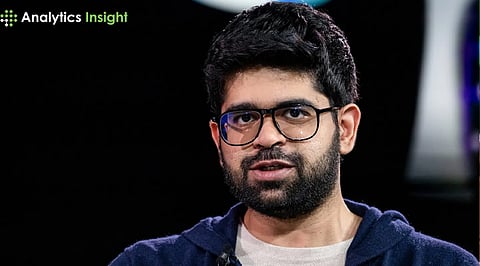
Artificial intelligence systems rely on humans to define which problems are worth solving, according to Aravind Srinivas, the CEO of AI startup ‘Perplexity’. The young leader noted that while AI can solve and optimize tasks it doesn't have the skill to frame meaningful questions.
During his exchange on a recent podcast with writer and entrepreneur Prakhar Gupta, Srinivas mentioned how AI lacks curiosity - a trait he described as crucial to scientific discovery and intellectual progress.
Srinivas explained that the key advantage humans hold over AI lies in identifying and prioritizing problems.
“AI could help humans solve an existing problem, but it is very different from AI solving it autonomously,” he said, adding that people still retain the edge because they define the problem itself.
According to his take, current AI systems are highly effective at verification, optimization, and pattern recognition, but they can not independently decide which questions are important enough to pursue.
Rejecting the claims around AI systems exhibiting curiosity, Srinivas clarified that it is a distinct human trait that drives breakthroughs. “Did AI pose a question and try to solve it? No,” he argued, highlighting that it's people who decide which conjectures or ideas deserve attention.
Srinivas further remarked that while AI can perform better than humans in some specific and limited areas, the ability to discern what really matters is still a human strength. This will continue to be the top distinction between artificial intelligence and human adaptability.
Srinivas acknowledged the trends of AI-based infrastructure changes, expecting on-device artificial intelligence to be a potential challenger to large data centers. If advanced inference can be run locally on chips, reliance on centralized computing facilities could decline.
This shift can disrupt the economics behind massive global investments in data centers, enabling a more decentralized AI ecosystem.
Also Read: Perplexity CEO Aravind Srinivas Introduces GPT 5.1 Upgrade for Paid Users
Srinivas emphasized energy consumption, mentioning that the human brain works on almost a negligible part of the electricity used in present-day data centers. He linked this effectiveness to intuition, curiosity, and the capability to question beliefs, which are not the character traits of current AI systems by nature.
Aravind also suggested that AI would make it easier to access powerful tools in the future, potentially changing how people manage daily workflows and learning. However, humans will always be the ones deciding the purpose and direction of technological advancements.
