.png)

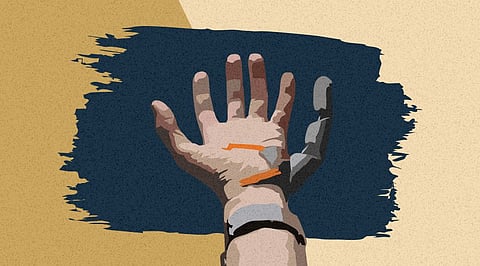
The modern advancements in the robotic industry can result in robotic augmentation. But that's not new information, right? The catch is, it might have a psychological toll on people. According to the latest research done by University College London, robotic augmentation can affect human brains. In a study published in the journal Science Robotics, the research team elaborated on how they fitted an extra robotic thumb on 36 participants, to observe how they adapt and use.
"In recent years, the interest in augmentation technology has been growing rapidly. But we are still lacking answers to some very fundamental questions, such as: Can the human brain support an extra body part?", says Paulina Keiliba, the study's first author and a fellow researcher.
The popular opinion that stands is the fact that just because robotic augmentation is possible, it doesn't mean humans should go for it. The psychological toll should be analyzed before making such a drastic move. The results of this study found out that robotic augmentation affects how our brain perceives our body.
There's another reason for this study. Right now, having a robotic body part might sound cool and something people can show off, but in the future, robotic augmentation can become necessary for labor-intensive jobs. Keiliba urges future research teams to take a deeper look at this notion. There's a big question in point here: if laborers have to wear an extra arm for their work, will they be able to re-adapt to their natural body movements afterward?
In the experiment, participants got used to their new thumbs easily and showed improved productivity. But according to Keiliba, this improvement comes with worry. "Using an extra robotic thumb is not neutral to the brain. For people to use the augmentative technology effectively, they need to change the way they use their natural fingers, they need to create new movement synergies, and by doing that, they update the way their body is represented in the brain", she explained.
After the experiment, the research team scanned the participant's brains to see any changes. They noticed a significant "shrinkage" in how participants mentally represented their own hands, which is not the case with people who lose a hand.
While the study doesn't discuss implications caused by robotic augmentation with bigger body parts, in the future, it will be necessary to consider these psychological changes, especially its effect on children and adolescents.
Join our WhatsApp Channel to get the latest news, exclusives and videos on WhatsApp
_____________
Disclaimer: Analytics Insight does not provide financial advice or guidance on cryptocurrencies and stocks. Also note that the cryptocurrencies mentioned/listed on the website could potentially be scams, i.e. designed to induce you to invest financial resources that may be lost forever and not be recoverable once investments are made. This article is provided for informational purposes and does not constitute investment advice. You are responsible for conducting your own research (DYOR) before making any investments. Read more about the financial risks involved here.
