.png)

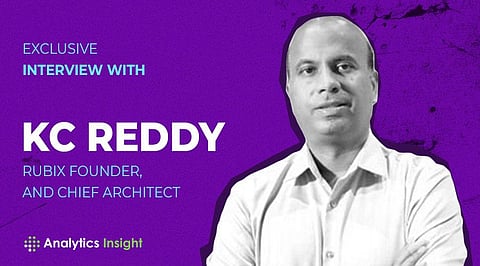
The cryptocurrency market is certainly not something that falls under the category of a clean system for its Proof of Work protocols are notorious for consuming considerable amounts of energy to call it sustainable. Even the alternative, proof-of-stake has the tendency towards centralization which is against the very intention of setting up a democratic money market. How would it be if these protocols can be combined to deliver the best of both? Rubix, an NFT platform is heading towards setting up a benchmark for the cryptomarket through its Proof-of-Pledge Blockchain technology. Analytics Insight has engaged in an exclusive interview with KC Reddy, Founder, and Chief Architect, of Rubix.
Rubix is a growing community of creators, investors, and crypto enthusiasts, powered by a breakthrough green "Proof-of-Pledge" blockchain technology that we pioneered. We're valued at more than $1 billion now, which includes a recent 100 million dollar investment from LDA Capital. While Rubix is a young blockchain, the platform is extremely robust and we're a quickly growing community and company, working to leverage Web3 and Web5 to solve the world's biggest problems.
Rubix is a Layer 1 blockchain protocol for peer-to-peer data transfer and transactions. Our decentralized architecture addresses many of the issues faced by Bitcoin, Ethereum, and other legacy L1 protocols, including limitations in cost, time, and energy efficiency, network security, and, ultimately, scalability. Rubix has zero transaction fees, secure, private, and transparent. Rubix has one of the lowest energy consumption rates among all computing networks at less than 1 kWh per transaction which is not only significantly less than the energy used by other blockchains but also less than the energy needed by visa to process a transaction. That's all! Thanks to our one-of-a-kind Proof-of-Pledge architecture.
My team and I started what is now Rubix, in 2017. Our initial goal was to create a decentralized platform that would empower digital users through increased data privacy and security through participative capitalism while expanding the total digital economy through tokenization. We continue to believe that there are serious gaps in the tech needed for Web3 apps. Rubix was created to address the gap.
Here at Rubix, we are a community that wants to disrupt the status quo and use our collective intellect to change the world for the greater good. From our inception, we have worked to be among the top blockchain platform providers in the world. Our goals include using our technology to solve some of the world's biggest societal issues including climate change and income inequality and establishing and maintaining ourselves as the first carbon-free blockchain platform.
Rubix's Layer 1 blockchain protocol for peer-to-peer data transfer and transactions is lightweight enough to be run on laptops, desktops, and virtual machines. Every node can be a validator while running normal business transactions in parallel. Rubix subnets offer enterprises flexibility, privacy, and agility to process their internal transactions while providing transparency on the chain. Unlike Ethereum and others, Rubix has no gas fees for its transactions, which is key to maintaining energy-efficient and low-carbon operations.
There are countless ways for our customers to derive value out of our platforms ranging from advertising and publishing to education. However, one example of particular interest is corporations leveraging this blockchain technology to reduce emissions. Organizations are feeling market pressure to set new ESG goals, particularly those that will help combat the impacts of climate change. Web3 presents an opportunity to accelerate the implementation of programs that will help meet tangible goals and improve transparency and reporting. Rubix, as a green blockchain, is an ideal platform for the development of the applications needed to facilitate the execution of those enterprise ESG programs.
A few things come to mind. While the Rubix blockchain continues to leverage the decentralized potential of Web3 – and others work hard to catch up with Rubix – many in the industry are focusing on what comes next. Web5 will allow for personal control of data in addition to the decentralized advantages of Web3. Rubix is already designed to support Web5 and will continue to pioneer additional applications for its green blockchain. We look forward to continuing to build meaningful partnerships that push the envelope. We have partnered with organizations including FINAO, YMCA, Trst01, Krista Software, Jupiter Meta, EVVO Labs, Ninestars, and Promantus with the goal of using the power of Web3 to solve the world's most critical issues.
Additionally, Rubix is grateful for our recent $100M investment from LDA Capital. This funding is game changing for Rubix in several ways. First and foremost, it allows us to continue growing our global ecosystem and the Rubix community with the end goal of creating a better and greener world through Web3. This kind of money opens doors to new and exciting opportunities that we are eager to share more about over the coming months. However, we are already building off this momentum. A few weeks ago, we updated the platform to "Rubix 2.1: Eismeer", which strengthens tokenization. An investment of this size is further proof that despite the news around "crypto winter", investors are still eager to fund innovative technologies that can be applicable to a variety of industries.
Rubix is the first green blockchain platform in the world. It is highly energy efficient. Rather than using the traditional Proof-of-Work or Proof-of-Stake (both of which are energy-intensive and result in significant storage inefficiencies because they require every node to store an entire transaction history), we've created Proof-of-Pledge, where each transaction achieves finality on its own without waiting to be pooled with unrelated transactions and so the network doesn't require expensive or energy-intensive miners. This is much less storage-intensive and energy-intensive than the alternative methods. It's truly revolutionary.
Many blockchain users cite scale, cost, and privacy concerns associated with Bitcoin, Ethereum, and other major blockchains. With these concerns in mind, at Rubix, we created our decentralized architecture to address many of the issues other blockchains face. As I previously mentioned, our Rubix is designed to address the scale, cost, and privacy issues associated with other blockchains through our Proof-of-Pledge protocol.
Additionally, monolithic chains like Ethereum all scale vertically, while Rubix scales horizontally with parallelism. Thanks to this unique subnet architecture, we are helping to bring one billion nodes onto Web3. Another differentiator for Rubix is that other chains are unable to solve the Blockchain trilemma. This means that they are only able to meet two of the three required conditions: scalability, security, and decentralization. Rubix is the only platform able to solve this trilemma thanks to our green peer-to-peer architecture.
Without a doubt, the blockchain community has had a turbulent year. From navigating "crypto winter" to public doubts surrounding the effectiveness of this revolutionary and crucial technology, now is the time to listen to our people.
I hope all of us in the industry can all take the time to step back and evaluate how our technology should adapt to compete in this marketplace and how we can continue to build trust in crypto assets and the potential for blockchain applications.
The global community of blockchain applications and project developers — needs reliable platforms. They need platforms they can trust that will not jeopardize their livelihoods. Because without efficient, secure, and truly scalable platforms, our course correction campaign will be futile.
Join our WhatsApp Channel to get the latest news, exclusives and videos on WhatsApp
_____________
Disclaimer: Analytics Insight does not provide financial advice or guidance on cryptocurrencies and stocks. Also note that the cryptocurrencies mentioned/listed on the website could potentially be risky, i.e. designed to induce you to invest financial resources that may be lost forever and not be recoverable once investments are made. This article is provided for informational purposes and does not constitute investment advice. You are responsible for conducting your own research (DYOR) before making any investments. Read more about the financial risks involved here.
