.png)

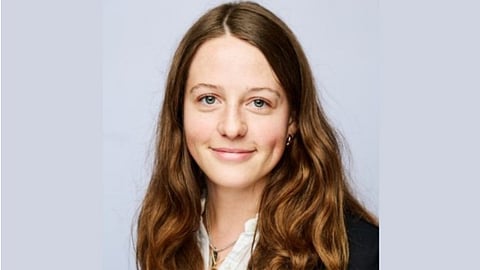
A hospital pilot can look successful long before the work is finished. Margaux Benoit has seen that gap up close. A handful of physicians may like the product. The early feedback may sound promising. The software may generate clean notes in a controlled setting. Then the harder questions begin: Who keeps using it after the first week? Does it fit the specialty workflow? Does it reduce time for clinicians in a measurable way? Can the value be proven to the people who control the renewal budget?
For Benoit, that is where many health AI conversations become too shallow.
“The pilot is not the finish line,” Benoit says. “In healthcare, the real test is whether the technology becomes part of the way people actually work.”
Benoit is an enterprise sales director in ambient AI documentation, a category that moved quickly from early interest to serious procurement across large health systems. The software she sells listens during a patient visit and generates the clinical note, giving physicians a way to spend less time typing during, and after appointments and more time focused on patient care. The business case is direct. Doctors are spending one to two hours on documentation for every hour of direct patient care, and that burden contributes to burnout and staffing pressure across the industry.
The promise is powerful, but Benoit believes the promise alone is not enough.
Many hospitals are no longer asking whether ambient AI can write a note. They are asking which vendor can handle clinical variation, EHR integration, user adoption, security expectations, and measurable return on investment. The market has become more competitive, with systems comparing vendors such as Nuance/DAX, Abridge, Nabla, and Epic’s own emerging product. That shift has made buying decisions more demanding and implementation more important.
"Anyone can ship a demo. What separates the platforms that last is whether clinicians still trust the output six months in," Benoit says.
That perspective comes from her work across major health systems. Benoit helped build Nabla’s US commercial function from the first customer to enterprise contracts with systems including CHLA, Denver Health, Aultman Health, Carle Health, BronxCare Health System, and University of Toledo. She has run competitive displacement deals and watched hospitals decide what matters when the initial excitement around AI gives way to procurement reality.
Her view is that ambient AI should be evaluated less like a documentation shortcut and more like an operating-model change. A physician’s note may be the visible output, but the product touches many parts of the organization: clinical workflow, IT, compliance, EHR configuration, revenue cycle, physician satisfaction, and long-term retention. If the implementation is treated as a light software launch, the hospital can miss the real work.
"People underestimate how far a good product can go on its own. But going from one department to an entire enterprise is a different challenge, and that's where change management makes or breaks it," Benoit says.
Healthcare does not change at the speed of a consumer app. Clinicians are already overloaded. Compliance teams are cautious for good reason. IT departments are managing complex systems and competing priorities. Finance leaders want proof that a new tool will do more than create another line item. Each group is looking at the same technology through a different lens.
Benoit has learned that a pilot has to be structured for all of them.
For physicians, the question may be whether the tool saves time without making the note feel generic or inaccurate. For clinical leaders, it may be whether adoption spreads beyond early champions. For CFOs, it may be whether the product affects documentation quality, coding, billing, or downstream financial performance. For CMIOs, it may be whether the technology fits cleanly into Epic, Cerner, or another EHR without creating more work.
“If you only prove value to one group, you may still lose the deal,” Benoit says. “The physician has to feel it. The clinical leader has to trust it. The executive buyer has to see why it matters at scale.”
Specialty workflows raise the stakes further. A documentation tool that performs well in primary care may not translate cleanly into cardiology, oncology, or another specialty with different terminology, formats, and billing requirements. Benoit has seen how quickly a general demo can lose force when a department asks more specific questions.
That is why she stays close to product and implementation, not only the sales cycle. Her background in healthcare and life sciences helps her understand clinical nuance, while her interactions with physicians has taught her that details decide whether a tool feels useful or burdensome.
“I try to stay close to what happens after the contract,” she says. “That is where you learn whether what you sold is actually becoming valuable.”
The next wave of ambient AI will make that even more important. Benoit sees the category moving toward agentic AI, where tools do more than generate notes. They help with coding, billing, referrals, follow-up tasks, and other parts of clinical administration. That future requires deeper workflow integration, not less.
Hospitals already face vendor and pilot fatigue. They are offered point solutions constantly, each promising relief. Benoit believes the vendors that last will be the ones that understand the daily reality of clinical change and can prove value beyond a single feature.
“A hospital does not need another tool that looks impressive for two weeks,” she says. “It needs technology that can survive the everyday pressure of care delivery.”
That is especially true in under-resourced systems. Benoit has worked on challenges specific to organizations such as BronxCare, where the case for adoption has to be built around operational efficiency, staff retention, and practical relief rather than innovation for its own sake. In those settings, the stakes can feel even clearer. If a tool does not save time, support clinicians, or improve the workflow in a measurable way, enthusiasm will not carry it.
Benoit’s larger argument is simple: the future of health AI will not be decided by model performance alone. It is already decided inside implementation plans, specialty workflows, clinical habits, EHR integration, and the trust hospitals build or lose after the pilot begins.
The lesson Benoit takes from these deployments isn't really about AI. It's that healthcare doesn't scale technology so much as it scales trust, one department and one skeptical clinician at a time. That's the part of the work she's tried to stay close to.
