.png)

Smart devices enable faster diagnosis through connected sensors, advanced imaging, and intelligent medical monitoring technologies.
Wearables and home monitoring systems improve chronic disease management while supporting preventive healthcare for millions.
Robotics and digital health innovations enhance treatment precision, patient recovery, and healthcare accessibility across diverse settings.
Healthcare is getting way more connected, so patients and doctors have even better access to health info than, well, ever before. Smart medical devices now monitor vital signs, they can catch diseases earlier and also help guide care both inside hospitals and out at home. Some of these tools are already helping patients right now, while other solutions are set to become more common in the next few years.
Modern imaging software helps radiologists review X-rays, CT scans, and MRI images more consistently. It allows them to spot suspicious areas and pin down illnesses like cancer, fractures, and stroke faster than before, Since the software handles much of the groundwork. Still, the very last call is always made by the physicians, not the machines, even if it feels a bit automatic at first.
Continuous Glucose Monitors have changed the way diabetes is managed as they let people keep an eye on blood glucose in real time, all day long, even when you’re not thinking about it. Typically, the glucose monitor comes with a tiny sensor tucked under the skin, and it sends the information over to a smartphone, or sometimes to a separate receiver.
Wearable ECG devices help with the ongoing observation of patients’ heart rhythms, like what’s going on beat to beat. They notice misalignments in the heart rhythm, for example atrial fibrillation, and other odd timing patterns. The gathered data may provide crucial knowledge about the patient’s own rhythm behavior.
Portable MRI scanners make it possible to use this advanced diagnostic equipment in remote settings where stationary MRI machines cannot be installed. The portable design enables the MRI scanner to be used in emergency rooms and rural clinics.
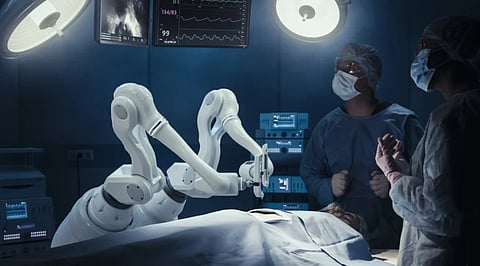
Robotic-assisted surgeries enable doctors to conduct complicated operations with increased accuracy. Smaller incisions lead to minimal bleeding, decreased chances of infections, less pain, and faster recovery; therefore, robotic-assisted surgeries are beneficial in various types of operations.
Smart inhalers consist of two parts: they administer drugs to a patient and monitor drug usage. Thus, smart inhalers track inhaler use, notify patients about missed doses, and provide health information to healthcare providers.
Biosensor patches are wearable devices that constantly monitor patients' heartbeat, breathing frequency, body temperature, blood oxygen level, and hydration. These devices can be very useful for people who have recently undergone surgery, older adults, and patients suffering from chronic diseases.
The ingestible capsule includes a miniature camera and sensor that move through the patient's body to capture images and gather diagnostic information. In addition, new devices allow delivery of the drug to certain parts of the gastrointestinal tract.
Exoskeletons aid patients during the process of rehabilitation after such conditions as stroke, spinal cord injuries, and neurodegenerative diseases. They assist with movement, helping patients recover mobility and providing therapists with performance data.
Home monitoring devices allow patients to monitor parameters such as blood pressure, heart rate, oxygen saturation, sleep patterns, and others without leaving the house. All collected information is securely transmitted to healthcare professionals.
Smart medical devices have significantly changed the way healthcare is provided, making diagnosis, treatment, and constant monitoring much easier. This technology allows physicians to make well-informed decisions and helps patients to take control of their health status. Smart medical devices will enhance preventive medicine and improve access to high-quality health care in the future.
Smart medical devices use sensors, connectivity, and software to monitor health, assist diagnosis, support treatment, and improve patient care.
They continuously track vital signs, detect abnormalities early, and share health data with doctors for timely medical intervention.
No. Many devices, including glucose monitors and health trackers, are designed for home use and remote patient monitoring.
No. They support healthcare professionals by providing accurate data and insights, but diagnosis and treatment decisions remain with doctors.
Continuous Glucose Monitors, smartwatches with ECG features, and connected blood pressure monitors are among the most widely used devices today.
