.png)

Esports demands high skill, fast reactions, and intense training, similar to traditional sports.
The biggest debate is the lack of physical activity, making its “sport” status unclear.
Despite doubts, esports is growing fast with global recognition, big events, and career opportunities.
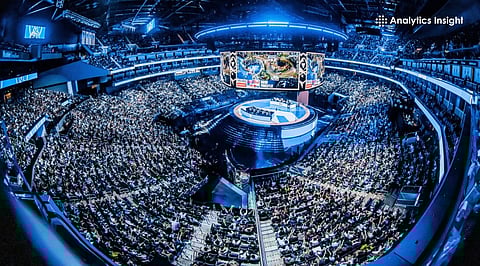
A large stage, bright lights, and thousands of fans cheering for players who sit in front of screens. This scene now feels common across the world. Competitive gaming has grown into a huge industry, with millions of viewers and prize money that reaches millions of dollars. What once looked like a simple hobby has turned into serious competition.
Still, one question keeps coming back again and again. Is esports really a sport? Some people accept it easily, while others strongly disagree. The answer is not simple. The debate has many layers, and each side has strong points. Understanding this topic needs a closer look at skill, effort, rules, and even how sports are defined today.
Professional players spend long hours every day to improve their performance. Training often lasts between 6 and 12 hours. This time is not just about playing games. It includes practice matches, strategy discussions, and studying past performances.
Reaction speed plays a very important role. Top players react in about 150 milliseconds, which is much faster than an average person. Hand and eye coordination also stays at a very high level. Every move needs to be quick and accurate. One small mistake can decide the result of a match.
Teams also work like traditional sports teams. Coaches guide players, analysts study opponents, and support staff helps improve performance. This structure shows that esports follows a system similar to other sports.
Also Read: Esports vs Sports: Why the Comparison is More Complex than You Think
Esports has clear rules and organized tournaments. Matches take place in leagues and global competitions. Some events fill large stadiums, while millions of fans watch online. Prize pools in top tournaments can cross millions, which shows how serious the competition has become.
Popular tournaments attract players from different countries. Teams compete at the highest level, just like in football or cricket. This level of organization makes esports look very close to traditional sports.
People believe that esports requires mental skills only, but actual requirements extend beyond this. Players experience intense match pressure, which lasts throughout their entire three-hour competition. Players must maintain their complete focus throughout the entire match.
The body also develops stress through another process. The combination of hand movement and prolonged sitting and screen time creates health problems. Players experience multiple health issues, which include wrist discomfort, back pain, and visual fatigue. The physical effects of esports competitions demonstrate that players need to stay active throughout their games.
Heart rate can also rise during intense matches. In high-pressure situations, it can reach levels similar to other competitive activities. This shows that the body reacts strongly even in a digital environment.
The biggest question is about physical activity. Traditional sports include running, jumping, and physical strength. Esports does not show this kind of movement.
Many people feel that sports must include full-body action. Without that, it feels different. This is why some people compare esports to games like chess. These games need skill and thinking, yet many people do not call them sports.
The argument maintains that sports require players to demonstrate visible physical effort through their performance. The absence of this requirement leads most people to believe that sports become excessively broad in their definition.
Another important point makes esports different from traditional sports. Every game belongs to a company. The company controls how the game works. It can change rules, update features, or even stop the game completely.
In traditional sports, no single company owns the game. Rules stay stable for long periods and change slowly through official bodies. This gives traditional sports a sense of balance and fairness.
In esports, sudden updates can change gameplay quickly. Players must adapt again and again. This makes long-term consistency more difficult compared to traditional sports.
Despite the debate, esports is gaining acceptance. Many countries now recognize esports players as athletes. This allows players to get support, training, and even special visas for competitions.
Large organizations have also started exploring esports events. Global platforms now treat esports as a serious competition. Schools and colleges offer scholarships for talented players, which shows growing trust in this field.
This recognition shows that esports is slowly becoming part of the larger sports world, even if the debate continues.
Also Read: Top Competitive Esports Tournaments to Watch in 2026
The discussion is not just about calling esports a sport or not. It affects real opportunities. Recognition helps players build careers and gain financial support. It also changes how society views gaming as a profession.
Health and training also improve when esports is treated seriously. Players follow better routines and take care of their physical and mental health. This helps them perform better over time.
The debate also reflects a bigger change in the world. Digital platforms are growing fast, and esports stands at the center of this shift.
Esports sits between traditional sports and mind-based competition. It shows strong skill, strict training, and serious competition. At the same time, it lacks the physical movement that defines most sports.
This mix makes the debate more complicated. There is no simple answer that fits everyone. The definition of sport continues to change, and esports plays a big role in that change.
One thing is clear. Esports has already built its place as a powerful form of competition. Its growth, popularity, and impact show that it will remain an important part of the future, no matter how the debate is settled.
You May Also Like:
Top Esports Companies and Startups to Work for in 2026
Top 10 Esports Influencers to Follow in the US (2026 Edition)
1. Is esports a sport debate?
Ans. The debate around esports continues. Many argue it qualifies as a sport due to competition, skill, and training involved, while others question its physical aspect. Still, its growing popularity and organized tournaments strengthen its recognition as a modern sport.
2. Are 51% of gamers female?
Ans. Yes, recent data shows about 51% of gamers are female, 49% male, and around 1% non-binary. This highlights how gaming has become inclusive and diverse, breaking old stereotypes that gaming is mostly a male-dominated activity worldwide.
3. Is Gen Z less into sports?
Ans. Generation Z is not less interested in sports, but their habits differ. Many prefer highlights, social media clips, and digital content over live matches, with about one in five Gen Z fans skipping traditional live sports viewing.
4. What is the #1 hardest sport in the world?
Ans. According to rankings by ESPN, boxing is considered the hardest sport. It requires extreme physical fitness, mental strength, endurance, speed, and resilience, making it one of the most demanding sports globally.
5. Is esports good or bad?
Ans. Esports is generally seen as beneficial. It promotes teamwork, communication, leadership, and strategic thinking. Unlike traditional sports, it avoids physical injuries and heavy travel, though excessive gaming without balance can still pose health concerns.
