.png)

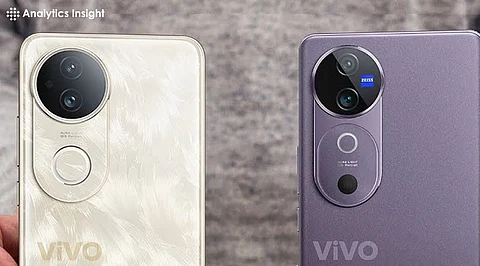
The Vivo V50 and V40 share nearly identical camera hardware, both offering a 50MP main sensor with OIS, a 50MP ultra-wide lens and a 50MP selfie camera with Zeiss optics.
The V50 pulls ahead on battery life and storage, packing a 6000mAh battery with 90W fast charging and up to 512GB storage, compared to the V40's 5500mAh battery and 256GB cap.
Both phones run on the Snapdragon 7 Gen 3 processor with similar benchmark scores, but the V50 holds a slight edge in thermal efficiency and gaming stability during longer sessions.
The Vivo V50 and V40 remain two of the most talked about mid-range smartphones from Vivo, even as the brand has since moved on to newer V-series models like the V70 and the upcoming V80. For buyers hunting for a reliable device on a budget in 2026, both phones still offer strong value on the second-hand and discounted retail market.
Comparing these two models in terms of camera capabilities, battery life and overall performance highlights subtle yet significant differences that can impact purchasing decisions even today.
Both the Vivo V50 and V40 pack impressive camera specifications, making them attractive choices for photography enthusiasts. Both models feature a dual-camera setup consisting of a 50MP main sensor with Optical Image Stabilization and a 50MP ultra-wide lens.
This configuration allows for high-quality images with good detail and vibrant colours. The Zeiss optics further enhance image quality, letting users capture solid photos in different lighting conditions.
The selfie capabilities are equally strong, with both devices carrying a 50MP front camera, a feature that remains appealing to social media users. Although the camera hardware stays mostly the same in both models, the V50 gains software improvements through Funtouch OS 15, which improves image processing compared to the V40's Funtouch OS 14.
With newer Vivo phones now pushing 4K cinematic video as a standard feature, buyers should note that neither the V50 nor V40 offers this capability, a gap worth considering against 2026's camera standards.
Battery performance remains a critical factor for most smartphone users, and both the Vivo V50 and V40 hold up reasonably well even by current standards. The V50 comes with a 6000mAh battery that supports 90W fast charging. This larger capacity lets users enjoy extended usage without frequent recharging, making it ideal for heavy users.
The V40 features a slightly smaller 5500mAh battery with 80W fast charging support. It remains respectable, but may not last as long as the V50 under heavy usage. The increased battery capacity in the V50, paired with faster charging, gives it a clear advantage in longevity. Newer V-series phones, such as the V80, now push battery capacity close to 7,200mAh, so buyers prioritising battery life alone may want to check current-generation options before settling on either model.
Both smartphones run on the Qualcomm Snapdragon 7 Gen 3 processor, delivering smooth performance across daily tasks. Both devices perform similarly in benchmark tests, though the V50 shows slightly better results in thermal efficiency and gaming stability.
Both score around 810,000 points in AnTuTu benchmarks, but the V50's improved thermal management supports sustained performance during longer gaming sessions.
The Vivo V50 offers configurations up to 12GB of RAM and storage up to 512GB. The V40 provides similar RAM options but tops out at 256GB of storage, making the V50 more suitable for power users. The V50 ships with Funtouch OS 15 based on Android 15, while the V40 launched on Android 14 but remains upgradeable.
Since these processors now sit a couple of generations behind Vivo's newer Snapdragon 7 Gen 4-powered phones, buyers focused purely on raw performance may find sharper gains in current-generation models.
Both smartphones feature quality AMOLED displays with a high refresh rate. The Vivo V50's 6.77-inch Full HD+ AMOLED display carries a 1080 x 2392 pixel resolution and a peak brightness of up to 4500 nits. Its quad-curved design enhances immersion during media consumption.
The Vivo V40 sports a slightly larger 6.78-inch AMOLED display with a sharper 1260 x 2800 pixel resolution. Some users may prefer the flatter design of the V50 to avoid accidental touches common with curved displays.
Both devices support up to 120Hz refresh rates, ensuring smooth scrolling and a solid gaming experience, a benchmark that still holds up reasonably well against 2026's mid-range display standards.
Even with newer Vivo models now available, the V50 and V40 continue to attract buyers looking for dependable performance at a lower price point in 2026. Understanding where these two phones differ helps shoppers make a smarter choice, whether they are buying new stock, refurbished units, or comparing against current-generation alternatives.
In summary, the Vivo V50 and V40 remain equally admirable in terms of specifications, serving slightly different user needs. Both models perform well with their dual-camera arrangements, though the V50's bigger battery and faster charging make it the clear winner on longevity.
While both phones share similar processors, the V50 holds the edge in thermal control and storage management. If battery life, sustained performance and newer software matter most, the Vivo V50 remains the stronger pick. If display resolution and solid all-round performance without breaking the bank matter more, the Vivo V40 still holds its own, even against Vivo's newer 2026 lineup.
1. What is the main difference between the Vivo V50 and V40?
The biggest differences lie in battery capacity and storage options. The V50 offers a larger 6000mAh battery, faster 90W charging, and storage up to 512GB, while the V40 caps out at 5500mAh, 80W charging and 256GB storage.
2. Do the Vivo V50 and V40 have the same camera setup?
Yes, both phones share a similar dual-camera arrangement with a 50MP main sensor featuring OIS, a 50MP ultra-wide lens and a 50MP selfie camera. The V50 benefits from slightly better image processing through its newer software.
3. Which phone performs better for gaming?
The Vivo V50 has a slight advantage in gaming due to better thermal management, which helps it sustain performance during longer sessions. Both phones use the same Snapdragon 7 Gen 3 processor and score similarly on benchmark tests.
4. Is the Vivo V50 worth buying over the V40 in 2026?
If battery life, storage and newer software features matter most, the V50 is the stronger pick. If display resolution and solid all-round performance at a lower price matter more, the V40 still holds its own.
5. How do these phones compare against Vivo's newer 2026 models?
Newer Vivo phones like the V80 offer larger batteries, sharper cameras with 4K cinematic video, and newer processors. Buyers prioritising the latest features may want to consider Vivo's current-generation lineup over the V50 or V40.
