.png)

Tamil Nadu boasts the highest number of engineering colleges, offering diverse programs across core and emerging technologies.
Strong policies, historical foundations, and industrial demand contribute to Tamil Nadu’s leadership in technical education nationwide.
Students benefit from structured admissions, quality faculty, and industry-aligned courses, ensuring employability and career growth opportunities.
Tamil Nadu tops the list of Indian states with its engineering colleges, having nearly 892 AICTE-approved institutions, while Maharashtra and Uttar Pradesh come next. The various programs in computer science, mechanical, civil, electronics, and emerging technologies reflect a strong emphasis on technical education and industry-ready skill development.
This concentration of engineering colleges in Tamil Nadu is primarily a result of well-thought-out past policies, continuous funding for technical education, the presence of a supportive environment, and a culture that considers engineering to be a promising profession. Factors playing a major role include:
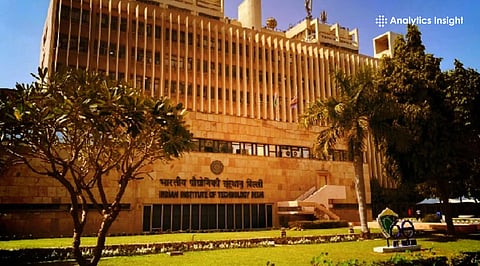
The Madras Presidency's early institution-building had a noose around it and, therefore, could only come up with higher education as one of its main themes, which was symbolized by the creation of IIT Madras in 1959.
With several state engineering colleges being constructed from the 1950s to the 1970s, subsequent Tamil Nadu governments implemented proactive policies to expand this learning network. Supporting government colleges and promoting private participation with consistent regulation, the state now presents top-tier opportunities.
Strong schooling pipeline fosters a coaching culture for engineering entrance exams, utilizing a network of pre-university centres while creating ambitious cohorts. Teacher supply benefits from a vibrant job market in higher education and proximity to universities, ensuring access to qualified faculty and meeting demands for placements.
Engineering still remains a favorite among students and parents because of its employment opportunities, primarily in software, electronics, and manufacturing. Tamil Nadu also follows some structured admission procedures for engineering courses, such as the Tamil Nadu Engineering Admissions, making it easier for people to enroll in the courses.
A strong industrial base consisting of the auto, electronics, and IT sectors not only guarantees a continuous call for skilled engineers but also tempts universities to establish branches, providing diverse courses in accordance with the industry standards.
Collectively, the engineering colleges in Tamil Nadu, in fact, across India, offer a wide range of undergraduate, postgraduate, and doctoral programs to meet the industry's demands for growth in technology.
Bachelor of Technology (B. Tech): The most common undergraduate degree course, which covers all the core and emerging branches.
Bachelor of Engineering (BE): Equivalent to B.Tech, offered in similar disciplines.
Key undergraduate disciplines include:
Computer Science & Engineering (CSE)
Electrical & Electronics Engineering (EEE)
Computer-Aided Mechanical Engineering
Civil Engineering
Electronics & Communication Engineering (ECE)
Information Technology (IT)
Artificial Intelligence, Data Science & Machine Learning
Biomedical, Chemical, Aerospace, and Environmental Engineering
These programs usually span four years and involve theoretical as well as laboratory training.
Master of Technology (M.Tech): Advanced studies in specialized areas like Robotics, AI, VLSI, and Structural Engineering.
Master of Business Administration: Focusing on management for engineers.
Master of Science (M.Sc): Advanced research and academic roles.
Ph.D. in Engineering: To develop depth and expertise through original research in core and interdisciplinary areas.
Besides these core degrees, many colleges also offer diploma and certificate programs, industry internships, project-based learning, etc. to enhance employability.
Also Read: Top 10 Engineering Colleges with the Best AI Programs
The largest engineering colleges are situated in Tamil Nadu, a result of the state’s educational and regulatory history. Hundreds of establishments offer countless engineering branches and continue to shape India's engineering workforce.
Which Indian state has the most engineering colleges?
Tamil Nadu has the highest number of engineering colleges in India, with 892+ AICTE-approved institutions offering diverse programs in technology and engineering disciplines.
Why does Tamil Nadu have so many engineering colleges?
Strong historical foundations, proactive government policies, industrial demand, and a culture valuing engineering careers contribute to Tamil Nadu’s largest concentration of engineering colleges.
What courses are offered in Tamil Nadu engineering colleges?
Colleges offer undergraduate B.Tech/BE, postgraduate M.Tech/MBA/M.Sc, and Ph.D. programs in disciplines like CSE, EEE, ECE, IT, AI, Data Science, Mechanical, Civil, and more.
How do students get admission in Tamil Nadu engineering colleges?
Admissions are usually managed through the Tamil Nadu Engineering Admissions (TNEA) process, entrance exams, or merit-based selection, depending on the college and program requirements.
What career opportunities do Tamil Nadu engineering graduates have?
Graduates can work in IT, software, electronics, manufacturing, robotics, AI, and emerging technology sectors, benefiting from strong industry linkages and placement support.
