.png)

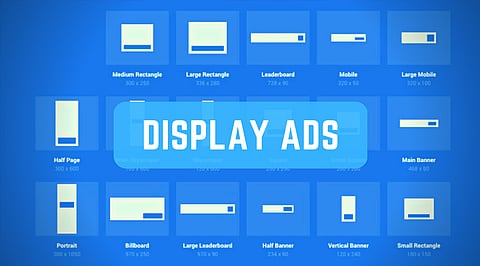
In 1994, the first banner ad ran online. Three decades later, the banner ad remains a staple of digital marketing. There are many reasons for its longevity, including its relative simplicity to deploy and lack of invasiveness when assigned to a webpage appropriately, but clearly, it’s the results that have led to brands continuing to trust what is, by internet standards, a somewhat archaic form of advertising.
With its ability to reach broad audiences and measure engagement very well, the banner ad has persisted through and will continue to persist thanks to innovation from marketers, as this https://www.dmnews.com/ piece explains. It’s an enduring legacy that underpins so many other forms of online marketing, but where will these 30-year-old ads go as a new phase of digital technology takes hold?
As a central pillar of digital advertising, banner ads have spawned many creative new takes on the form, including a method of on-site advertising rather than the slightly more intrusive form of advertising around the web. The carousel ad is certainly an evolution of the banner ad, and one that some banner ads have even taken inspiration from to form a ticker-tape run of ads on banners elsewhere.
Carousel ads sit atop web pages, are also often static images, but run through in a kind of slideshow. It adds animation, high-quality graphics, and a way to quickly relay a lot of information. At https://www.skycitycasino.com/, the carousel ad is used to showcase the shop, the daily prizes being given away in live games, and just to add an eye-catching image atop the page. It all improves the experience and relays information.
The enduring allure of banner ads and their spinoffs, like carousel ads, is simplicity. Carousel ads build on the banner by being bigger, a bit more dynamic, having more detail, and offering better-quality images. Both are clear-cut, and neither are overly invasive when using a webpage. Unlike video ads that stick on the page, take up viewing space, and add sound, banner ads are subtle and get engagement when the user is actually interested in the ad.
It seems inevitable that banner ads will continue to be a part of the digital experience for years to come. Powering this will be a highly-anticipated pivot away from third-party cookies. Even if Google bailed on its planned “Cookiepocalypse,” as detailed by https://www.techtarget.com/, Apple has already committed to the end of the cookies, and more look set to follow while Google seeks to offer users more ways to stop them.
Marketers, then, will look to other technologies to help enhance their digital ads. Being the hot topic right now, artificial intelligence is at the forefront of this conversation. The main focus of this pivot would seemingly be to use AI in contextual targeting. Ads could get paired with relevant information through real-time AI analysis for a non-invasive way of making banner ads as relevant as possible.
Naturally, AI and its machine learning could also boost personalization efforts. User behaviors and preferences could be noted by AI as they arrive, with the program then relaying that to pick the ideal banner ad that suits the user. It’d mean brands creating several banner ads and, potentially, pathways for the roster, but that effort could be richly rewarded with the showcased increase in engagement for personalized experiences online.
Even as we enter this new phase of the internet with Web3 and AI-powered tools, the banner ad looks set to not just survive for more years, but continue to thrive, powered by new technologies to make them all the more effective.
