.png)

Fraudsters use fake payment requests and QR codes to trick unsuspecting UPI users.
Sharing UPI PINs, OTPs, and banking credentials can expose accounts to fraud.
Verify transactions, report suspicious payments, and follow essential digital safety precautions.
Unified Payments Interface (UPI) has made digital transactions quicker and more convenient in India. From paying at neighborhood shops to transferring money to friends and family, users can complete transactions within seconds using a smartphone. However, the growing use of UPI has also created opportunities for cybercriminals to target unsuspecting users through fake payment requests, fraudulent QR codes, and impersonation scams.
Many UPI frauds rely on confusion rather than sophisticated hacking techniques. Scammers often pose as buyers, sellers, bank representatives, or customer support executives to convince people to approve transactions or share confidential information. A single careless tap on a payment request can drain a bank account.
Understanding how these scams work and recognizing suspicious payment requests can help users protect their money.
One common fraud involves scammers sending a collect request to a potential victim. Unlike a regular payment, which transfers money from the sender's account, a collect request asks the recipient to approve a transaction.
Fraudsters may claim that they are sending money and ask users to enter their UPI PIN to receive it. However, entering the PIN actually authorizes a payment from the user's account.
Scammers may also create urgency by claiming that a payment will expire or that an account needs immediate verification. Users should remember that receiving money through UPI does not require entering a UPI PIN.
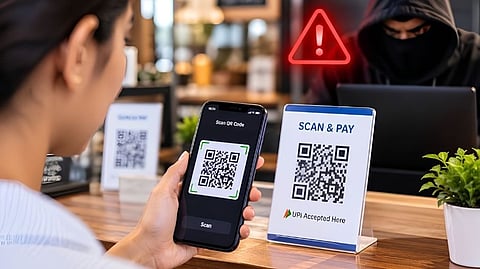
QR code fraud is another method used to trick digital payment users. Scammers sometimes share fraudulent QR codes while posing as buyers, sellers, or service providers.
A fraudster may tell a seller to scan a QR code to receive payment. However, the code may initiate a payment request instead of crediting money to the seller's account.
Users should understand that scanning a QR code does not automatically mean money will be received. Before approving any transaction, they must carefully check the amount, recipient details, and payment instructions displayed on the screen.
Never enter a UPI PIN simply because someone asks you to scan a code to receive money.
A UPI PIN is required to authorize payments and should remain confidential. Banks, payment applications, and legitimate customer support representatives do not need users to disclose their UPI PIN.
Similarly, users should never share one-time passwords (OTPs), banking passwords, or other authentication details with strangers.
Fraudsters frequently impersonate bank employees or customer support executives and claim that they need these details to resolve account-related problems. Such requests should be treated as suspicious.
If someone asks for confidential banking information over a phone call, text message, or messaging application, users should avoid responding.
Also Read: UPI's Record-Breaking October Puts Merchant Monetization Back in Focus
Before completing a UPI transaction, check the recipient's name and the amount displayed on the payment screen. Even if a payment request appears to come from a familiar contact, verify it independently if the circumstances seem unusual.
Scammers may also impersonate friends or relatives using compromised messaging accounts and request urgent transfers. Calling the person directly can help establish whether the request is genuine.
Users should avoid clicking unfamiliar payment links or installing applications shared by unknown individuals. Some fraudulent applications may be designed to gain access to sensitive information or control parts of a device.
If money is transferred through a fraudulent transaction, report the incident immediately to your bank and the payment service provider. Quick reporting may help authorities and financial institutions take action.
In India, victims can report financial cybercrime through the National Cyber Crime Reporting Portal at cybercrime.gov.in or by calling the national cybercrime helpline 1930.
Users should also preserve transaction IDs, screenshots, phone numbers, messages, and other relevant evidence. These details can help investigators examine the complaint.
Also Read: Best UPI and Online Payment Apps in India in 2026, Compared
UPI users can reduce their exposure to fraud by following a few basic precautions:
Never share your UPI PIN, OTP, or banking passwords.
Do not approve unknown collect requests.
Remember that receiving money does not require entering a UPI PIN.
Verify recipient details before completing payments.
Avoid scanning unfamiliar QR codes to receive money.
Do not install applications suggested by unknown callers.
Enable transaction alerts and regularly check bank statements.
Report suspicious transactions to your bank and the cybercrime helpline.
UPI has simplified everyday payments, but users must remain alert while handling digital transactions. Checking payment details, questioning unusual requests, and keeping banking credentials private can help prevent avoidable financial losses.
1. Can someone steal money through a UPI payment request?
Yes, scammers can trick users into approving fraudulent collect requests, resulting in money being deducted directly from their linked bank accounts.
2. Do you need a UPI PIN to receive money?
No, receiving money through UPI does not require entering a PIN. A PIN is needed only to authorise payments.
3. How do QR code payment scams work?
Fraudsters share fake QR codes that initiate payment requests instead of receiving money, tricking users into unknowingly transferring funds.
4. What should you do after a UPI fraud?
Immediately contact your bank, report the transaction through cybercrime.gov.in or call 1930, and preserve transaction details and screenshots.
5. How can you protect yourself from UPI scams?
Never share your UPI PIN or OTP, verify recipient details, avoid suspicious QR codes, reject unknown requests and monitor bank transactions regularly.