.png)

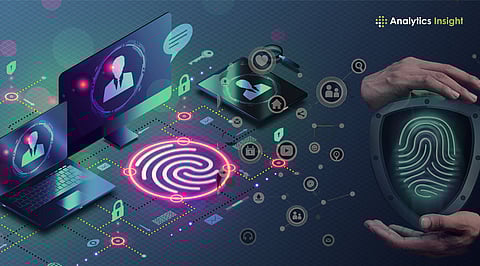
Identity and access management drives clearer access control and lowers breach risk for enterprises.
Major cybersecurity players expand rapidly, signalling rising demand for IAM solutions.
Privileged access services simplify high-risk access and help ensure enterprises manage complex environments.
Enterprise cyber threats are increasing as cloud adoption, remote work, and the use of connected systems increase. Traditional perimeter-based security models are not enough to protect sensitive data. This shift has pushed organizations to rethink how digital identities are created, managed, and protected across critical systems.
Identity and access management is a security layer that decides who gets access and when. A single compromised identity can now open the door to massive breaches and downtime. This reality has made one question impossible to ignore: can simplifying access controls be the fastest way to strengthen enterprise cybersecurity?
Also Read: Essentials of Identity and Access Management
Recent industry moves show increasing investment in identity security. Okta will expand its workforce in India by 50% to advance AI security solutions. This displays the importance of identity management in securing hybrid and cloud environments. Identity specialist Saviynt, on the other hand, raised $700 million to scale global IAM capabilities and support AI access challenges, showing the demand for advanced identity governance solutions in enterprises.
Effective identity management simplifies enterprise cybersecurity by combining identity governance and administration with access control processes. This stops threats at the access layer. IAM automates user provisioning and de-provisioning to make sure that only the right identities are given access to the right resources at the right time. Privileged access management services further mitigate risk by reinforcing control over critical systems and high-privilege accounts, which traditional security tools often overlook.
IAM solutions help IT teams reduce manual work, cutting password reset tickets and making compliance tasks easier. However, this automation not only increases productivity but also the burden of identity lifecycle management.
Security experts now view identity as the basic control plane for modern cybersecurity, especially with the ever-increasing cloud and hybrid work, which makes threats reach beyond the traditional network. Context-aware IAM enables the enforcement of continuous access verification, marking a significant shift in the adoption of static policies. This has exposed organizations to dynamic risks.
Besides, firms are employing identity governance methods that monitor access rights, job roles, and policy enforcement during the entire identity life cycle. This approach supports compliance with stringent data protection regulations and audit requirements, making governance a key differentiator in enterprise cybersecurity solutions.
Also Read: Innovations in Digital Identity Management: The Future of Secure Access
As enterprises explore cloud-first and hybrid environments, identity will be the most consistent line of defence. Strong identity and access management lowers complexity by bringing visibility, control, and automation to how users and systems interact. This helps organisations close security gaps while supporting speed and scale.
Simplifying enterprise cybersecurity will depend on how well identities are governed and protected. Companies that invest early in modern IAM frameworks are better positioned to prevent breaches, meet compliance demands, and adapt to future threats with confidence.
1. What is an enterprise identity management system?
Enterprise Identity Management (EIM) or Identity and Access Management (IAM) is the process organizations use to create, verify, store, and manage digital identities for their employees and sometimes customers.
2. What are the 4 pillars of IAM?
The four pillars of Identity and Access Management (IAM) are Identity Governance & Administration (IGA), Access Management (AM), Privileged Access Management (PAM), and often Active Directory Management (ADMgmt).
3. What are the key components of an effective identity and access management (IAM) system?
Key components of Identity and Access Management (IAM) center on verifying users (Authentication), deciding what they can do (Authorization), managing accounts (Administration/User Management), and tracking activities (Auditing), all supported by an Identity Repository storing user data and roles to secure digital assets and control access effectively.
4. What is the 3 triad in cybersecurity?
The three components of the cyber security triad (the CIA Triad) are Confidentiality, Integrity, and Availability, forming the foundational model for information security to protect data from unauthorized access.
5. What is identity management in cybersecurity?
Identity and access management is for making sure that only the right people can access an organization's data and resources. It's a cybersecurity practice that enables IT administrators to restrict access to organizational resources so that only the people who need access have access.
