.png)

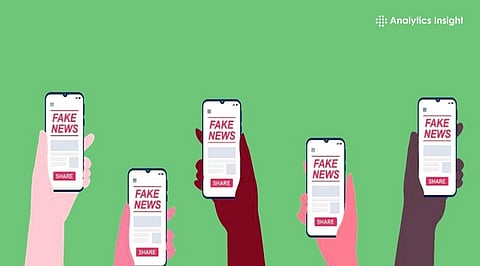
Viral content often spreads through emotional triggers rather than verified facts or credible reporting.
Checking sources, dates, and multiple reports helps distinguish journalism from misleading social media claims.
Pausing before sharing prevents misinformation and protects public trust in the digital information ecosystem.
Breaking news usually appears on a phone screen long before it airs on a television or is printed on the front page of a newspaper. A dramatic video, a provocative claim, or a speculative image spreads quickly through online platforms and reaches millions in minutes.
However, when people come across such content, some of it may be factual, but the rest can be misleading or false. In this environment, readers should be responsible and carefully evaluate information before accepting or sharing it.
False information rarely looks clumsy anymore. It is designed to tap into the public’s mood. A misleading post spreads not because it’s true, but because of the emotions it triggers.
Anger, fear, pride, and outrage make people more likely to share posts. The more a post confirms what people already believe, the less they feel the need to question it.
This is why an old video resurfaces during a new conflict, or a doctored quote circulates at a politically sensitive moment, the content appears believable.
For instance, an old video of actor Rajpal Yadav thanking Salman Khan resurfaced during the recent bail plea proceedings, misleadingly shared as a fresh reaction.
By the time verification begins, the post has already gathered thousands of views, likes, and comments, giving it the illusion of authenticity.
Also Read: A Rs. 7,000 Price Hike for iPhone 17 in India: Fake News or Truth?
There are small, consistent signs that help separate reporting from rumour. Headlines written like warnings, ‘media won’t show this' and ‘share before it gets deleted,’ are meant to create urgency rather than awareness.
Graphics that mimic logos of well-known news channels but carry no byline or date are another giveaway. Authentic journalism, even when it is a quick update, leaves a trail: a reporter’s name, a publication, a time stamp, or a source.
The information’s origin usually tells the real story. A claim that appears only on anonymous handles or unfamiliar websites, but nowhere else, can be fake. Major developments are not confined to a single post. A quick search across credible news platforms usually reveals whether the story stands on facts.
Context is equally important. A clipped video can change the approach of a speech, or a photograph from a different country can be presented as a local incident. Checking when and where a piece of content first appeared usually changes the entire narrative.
Fact-checking is no longer limited to newsroom desks. It has become a daily responsibility for anyone who consumes and circulates information. Looking up a claim, scanning multiple reliable reports, or checking a dedicated fact-checking site takes only a few minutes but prevents the spread of false information.
Reading the full report instead of reacting to a headline also makes a difference. Many misleading posts rely on half-statements and cropped data. The complete story usually carries the nuance that viral content removes.
There is also a behavioural shift involved. The pause before sharing is now as important as the instinct to share. Not every alarming or flattering message deserves to move forward to another group or timeline.
Misinformation is not just a digital inconvenience. It has affected public health decisions, raised social tensions, and damaged reputations within hours. Behind every viral false claim, there are real-world consequences for individuals, for communities, and for public trust.
Social media users are no longer passive readers; they are distributors. Each share gives a post a new life. Choosing not to circulate an unverified claim is a decision you should actively take.
Social media and other digital platforms are built for speed, where scepticism feels like a delay. However, it is this brief hesitation that protects the credibility of the larger information ecosystem. Trust is not built through the number of posts one consumes but through the care with which one evaluates them.
You can stop fake news by simply checking the source, looking for multiple reports, reading beyond the headline, and questioning anything that demands instant reaction. In the end, the fight against misinformation is less about technology and more about temperament, a reader’s willingness to slow down, verify, and value accuracy over the instant urge to react.
1. How can I quickly identify fake news on social media?
Check the source, look for a byline and date, compare with credible outlets, read beyond the headline, and avoid sharing posts that create urgency without verifiable evidence.
2. Why do fake posts spread faster than real news online?
They trigger strong emotions like anger, fear, or pride, confirm existing beliefs, and are designed for quick sharing, while factual reporting often requires context and time to verify.
3. Which tools help in detecting misinformation on social media?
Reverse image searches, fact-checking websites, keyword searches on trusted news platforms, and checking the original upload date help verify whether a viral claim is genuine or misleading.
4. Is every viral post on social media fake?
No, but virality is not proof of accuracy; genuine news appears across multiple credible outlets, carries clear sourcing, and provides context rather than relying on sensational presentation.
5. What is the safest habit before sharing any news online?
Pause and verify the claim, read the complete report, confirm the source, check the date and location, and share only when the information is supported by reliable evidence.
