.png)

The last ten years have witnessed health awareness changes that created new global consumption trends, yet these trends developed differently among various product categories. Between 2010 and 2022, alcohol consumption dropped by approximately 0.7 litres per person, while global tobacco use showed a 27% decline since the year 2000. The three factors driving these changes include rising health concerns, new regulatory requirements, and evolving lifestyle trends among young people.
Soft drinks, however, followed a different path. High sugary drink consumption among adults aged 15–39 increased from approximately 6.6% in 1990 to 11.1% in 2021, a rise of nearly 69%. People included soft drinks in their daily activities, which they performed between work, travel, and social occasions. People kept drinking because of their familiarity with taste and their regular drinking habits, which existed all around the world, despite increasing health risk awareness.
The existing contrast between these two entities demonstrates a wider trend. People do not stop their existing routines because they learn about health implications. People will continue their existing habits until they discover another choice, which will let them maintain their current way of life, while also decreasing their expenses.
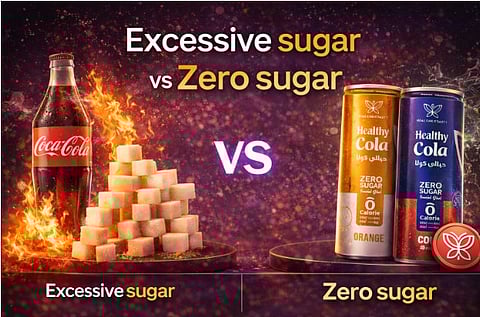
Soft drinks remain deeply integrated into daily life, but their long-term health trade-offs are becoming increasingly difficult to ignore. A standard Coca-Cola contains roughly 10–11% added sugar per serving, often exceeding the recommended daily intake in a single bottle.
Sustained high sugar consumption is strongly linked to rising rates of obesity, type 2 diabetes, and cardiovascular disease. Public health data shows these conditions increasing steadily across high-income regions, with similar trends emerging throughout South Asia. The economic cost of these conditions compounds over time, affecting productivity, healthcare systems, and long-term quality of life.
The issue is not the persistence of soft drink demand. It is the absence of alternatives that preserves taste and ritual without compounding long-term health risk. When substitutes compromise flavor or convenience, adoption remains limited, regardless of awareness.
Cola represents roughly 40% of global soft drink consumption within a market approaching $700 billion. Coca-Cola alone is valued at nearly $300 billion, built on refined sugar, phosphoric acid, and decades of habit reinforcement.
Healthy Cola approaches the category from a different direction.
It delivers zero sugar, uses plant-based sweeteners such as stevia, and focuses on health-first formulations while preserving the taste and consumption ritual that drives repeat behavior. Instead of attempting to change behavior, the model upgrades inputs.
Health and wellness beverages already exceed $100 billion globally. This creates a roughly seven-times gap between traditional sugar-based consumption and health-first alternatives, where long-term growth favors brands that align health, habit, and consistency rather than forcing consumers to abandon routines.
Traditional real-world asset tokenization focuses on financial abstraction. Assets are tokenized, capital circulates among investors, and value remains disconnected from real-world usage. Despite global real estate being valued near $393 trillion, total RWA value remains around $17 billion, highlighting how limited investor-only participation remains.
Healthy Cola operates on a different model. Through $HEALTH participation, capital directly funds beverage production via Produce-to-Earn, supports manufacturing, and converts retail and HoReCa sales into rewards and buybacks. As consumption increases, tokens are locked during production, circulating supply tightens, and demand is reinforced by real usage rather than speculative narratives.
This structure converts everyday consumption into economic participation rather than passive ownership.
Why This Shift Resonates With Millennials
Health-conscious millennials increasingly value systems where participation connects to real outcomes. Bitcoin represents financial scarcity and long-term value storage. Wellness-linked models represent economic contribution tied to everyday behavior and tangible impact.
Healthy Cola is already commercial, operating across 16 countries through retail, pharmacies, gyms, HoReCa, and delivery platforms. In 2025, revenue reached approximately $8 million, confirming sell-through, repeat orders, and distributor confidence. Growth now comes from distribution density rather than discovery.
As wellness-driven consumption continues to scale globally, models that link health, habit, and economic participation are gaining relevance. $HEALTH went live on LBank and surged over 220% from its $0.15 listing price, highlighting growing market interest in ownership models tied to real products and active consumer demand. This profile is increasingly aligned with what many market observers describe as the best crypto token 2026, driven by real usage rather than speculative narratives. It is also trading on Raydium here.
Join our WhatsApp Channel to get the latest news, exclusives and videos on WhatsApp
_____________
Disclaimer: Analytics Insight does not provide financial advice or guidance on cryptocurrencies and stocks. Also note that the cryptocurrencies mentioned/listed on the website could potentially be risky, i.e. designed to induce you to invest financial resources that may be lost forever and not be recoverable once investments are made. This article is provided for informational purposes and does not constitute investment advice. You are responsible for conducting your own research (DYOR) before making any investments. Read more about the financial risks involved here.
