.png)

Hardware wallets keep private keys offline, reducing the risk of hacks, scams, and malware attacks.
Crypto exchanges or third parties can be unreliable when it comes to storing your private keys safely, making hardware wallets a necessity.
Rising crypto theft and tighter regulations make self-custody more important than ever.
Crypto ownership depends on the safety of private keys. They are the only proof of your ownership on a blockchain. If the hackers gain access to them, they can easily move your funds permanently. Passwords, email access, or customer support cannot reverse a blockchain transaction. This emphasizes the need to use hardware wallets to protect your private keys against scams, cyberattacks, and crypto exchange failures.
Most crypto theft does not happen because blockchains fail. It happens because users store keys or funds on internet-connected systems. Phishing emails, fake websites, malware, browser extensions, and data breaches are responsible for most losses. These attacks are growing fast and becoming more advanced.
Recent crypto crime reports show that stolen funds were among the biggest threats in 2025. North Korea-linked hacker groups robbed close to $2 billion worth of crypto during the year. The Bybit exploit was another incident that resulted in a $1.5 billion theft. These events highlight that even major platforms with strong teams can still have vulnerabilities and fall prey to cyberattacks.
Hardware wallets lower the exposure to these risks by keeping private keys offline. Even if malware attacks a computer, the private keys stay protected within a hardware device.
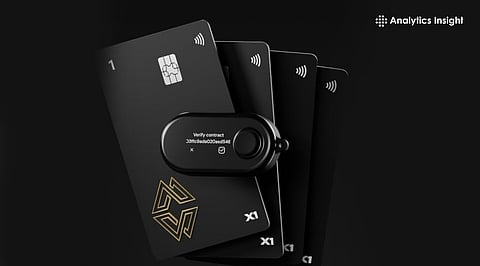
A crypto hardware wallet is a physical device built only for storing private keys and signing transactions. The keys are created inside the device and never leave it. When a transaction is made, the wallet signs it internally and sends only the signed transaction to the computer or phone.
This process is important because most attacks target software wallets that run on operating systems that support running many apps simultaneously. A single bad program can capture screen data, change copied addresses, or trick users into approving malicious transactions.
Hardware wallets also show transaction details on their own screen. It allows users to verify the receiving address and amount directly on the device. If malware changes the address displayed on the computer screen, the hardware wallet will still show the real destination. This alone keeps you safe from many real-world attacks.
Also Read - How to Stay Safe From Crypto Scams on Instagram
Phishing is one of the most common reasons for crypto losses. Fraudsters use fake emails, social media messages, and websites to trick users into entering seed phrases or approving transactions quickly. These scams are now more convincing because of advanced manipulation techniques and AI.
Reports suggest that around $17 billion worth of Bitcoin was stolen in 2025 through scams, including impersonation attacks. Hardware wallets make these scams less effective because private keys cannot be typed into a website. Transactions still require physical confirmation on the device, which prevents rushed mistakes. While no tool can stop every scam, hardware wallets reduce the damage by design.
Storing crypto on exchanges means trusting a third party. Exchanges are large targets for hackers and insiders because they hold massive amounts of funds and sensitive data.
According to reports, rogue customer support agents at a major exchange were bribed to expose customer data, which was later used for scams and theft. Estimated losses and reimbursements ranged between $180 million and $400 million. These incidents show that even internal employees can pose a security risk.
Hardware wallets remove this dependency as funds stay under the user’s direct control, regardless of what happens to any exchange, platform, or company.
As crypto regulation expands globally, centralized platforms are facing stricter rules. In early 2026, India introduced tougher KYC requirements, including live selfie checks and geo-location tracking for new accounts. Similar policies are being implemented in many regions.
While these regulations are in place to improve safety, they also increase the risk of account freezes, delays, and data breaches. Hardware wallets allow long-term storage without constant interaction with regulated platforms. This separation gives more stability when rules change suddenly.
Hardware wallets are designed to protect private keys. Many use secure chips that resist physical tampering and extraction. Even if a device is stolen, PIN protection and optional passphrases make access extremely difficult.
Another key feature is recovery through seed phrases. If a hardware wallet is lost or damaged, funds can be restored on a new device using the backup phrase, making the device replaceable.
Advanced users can also use multi-signature setups, where more than one device must approve a transaction. This is useful for large holdings, businesses, or shared custody situations.
Also Read - Top 10 Countries with the Highest Cryptocurrency Investors
Human mistakes are one of the reasons for crypto losses. Storing seed phrases online, taking photos of them, or entering them into websites defeats the purpose of offline storage. Buying devices from unofficial sellers can also be risky.
You can avoid these situations by writing the seed phrases on paper or metal, using a passphrase for extra protection, checking transaction details regularly, and limiting unnecessary smart contract approvals.
Hardware wallets are one of the best ways to store crypto because they directly address the key exposure threat. Offline key storage is a practical defense against hacks, insider attacks, and advanced scams.
By removing private keys from internet-connected systems and third-party platforms, hardware wallets reduce the attack surface. These devices do not rely on trust, promises, or customer support. For long-term crypto storage, hardware wallets are the strongest available option today.
1. What is a hardware wallet?
A hardware wallet is a physical device that stores crypto private keys offline and securely signs transactions.
2. Are hardware wallets safe from hackers?
They are much safer because private keys never touch the internet, making remote hacking very difficult.
3. Can crypto be recovered if a hardware wallet is lost?
Yes, funds can be restored using the recovery seed phrase on a new device.
4. Is a hardware wallet better than an exchange wallet?
Yes, it removes reliance on exchanges, which can be hacked, frozen, or mismanaged.
5. Are hardware wallets hard to use for beginners?
Most modern hardware wallets are user-friendly, but basic care is needed to store the recovery phrase safely.
Join our WhatsApp Channel to get the latest news, exclusives and videos on WhatsApp
_____________
Disclaimer: Analytics Insight does not provide financial advice or guidance on cryptocurrencies and stocks. Also note that the cryptocurrencies mentioned/listed on the website could potentially be risky, i.e. designed to induce you to invest financial resources that may be lost forever and not be recoverable once investments are made. This article is provided for informational purposes and does not constitute investment advice. You are responsible for conducting your own research (DYOR) before making any investments. Read more about the financial risks involved here.
