.png)

Overview:
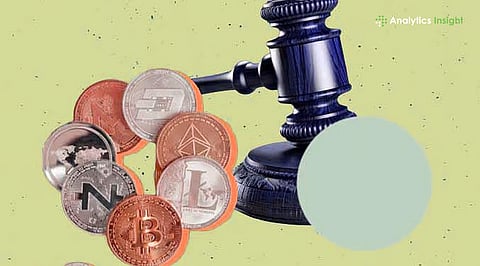
Asian regulators are developing structured crypto policies to promote innovation while protecting investors.
Each country’s authority focuses on licensing exchanges, preventing fraud, and ensuring financial stability.
Understanding these bodies help investors and startups stay compliant with the evolving crypto frameworks.
More than half of crypto users reside in Asia, which is why the regulatory bodies have to work around the clock to keep things in place. The mobile-first economies of Asian countries, alongside their ever-growing financial innovations, have fuelled this crypto craze, with governments enacting laws to ensure investor safety and combat money laundering.
Here is a list of the top ten crypto regulatory bodies in Asia:
Japan’s FSA is responsible for ensuring the stability of the nation's financial system. It protects depositors, insurance policyholders, and securities investors, while promoting smooth financial operations through measures such as planning and policymaking around the economic system. FSA is one of the top effective cryptocurrency regulators in 2025.
The Monetary Authority of Singapore (MAS) is this country's central bank. MAS promotes sustainable, non-inflationary economic growth through monetary policies, close macroeconomic surveillances, and analyses. Thanks to the MAS, Singapore boasts one of the most robust crypto laws in Asia.
The Securities and Exchange Board of India (SEBI) is a statutory body that oversees and regulates the markets in India. Primarily established to protect the interests of investors and promote the development and regulation of the securities market, SEBI ensures smooth operations across the nation.
The Financial Supervisory Service is South Korea's integrated financial regulator. It is responsible for examining and supervising financial institutions under the broad oversight of the Financial Services Commission.
The Securities and Exchange Commission (SEC), based in the Philippines, is the government agency responsible for regulating the country's securities industry, maintaining its register for all overseen activities.
The Securities Commission Malaysia (SC) is a self-funded statutory body responsible for regulating and developing the Malaysian capital market.
Taiwan's highest administrative agency is the FSC. It conducts supervision, examination, and inspection of the national financial market.
The Securities and Futures Commission (SFC) regulates the securities and futures markets in the country. Ensuring that the industry operates fairly and efficiently, it promotes orderly development while protecting the interests of investors.
Also read: Best cryptos for short-term gains 2025
Bank Negara Malaysia is Malaysia’s central bank. Founded in 1959, its mission is all about promoting monetary and financial stability that is conducive to sustainable economic growth.
The State Bank of Vietnam reinforces Vietnam’s commitment to anti-money laundering (AML) and counter-terrorist financing (CTF) compliance, making sure that crypto markets do not get exploited over illicit financial flows.
1. Why is crypto regulation important in Asia?
Crypto regulation is necessary because it promotes investor safety while reducing the risks around fraud.
2. Which Asian country has the most advanced crypto regulations?
Japan and Singapore have the most developed laws.
3. How do regulators handle crypto taxation?
Policies vary among countries, but India and Japan tax capital gains from cryptocurrency, while others are still refining their rules.
4. Are decentralised exchanges regulated in Asia?
Yes, most of these countries require DEXs to comply with AML and KYC obligations to prevent illegal trades.
5. Will crypto become fully legal across Asia?
Eventually, it will, but that level of impact takes time.
Join our WhatsApp Channel to get the latest news, exclusives and videos on WhatsApp
_____________
Disclaimer: Analytics Insight does not provide financial advice or guidance on cryptocurrencies and stocks. Also note that the cryptocurrencies mentioned/listed on the website could potentially be risky, i.e. designed to induce you to invest financial resources that may be lost forever and not be recoverable once investments are made. This article is provided for informational purposes and does not constitute investment advice. You are responsible for conducting your own research (DYOR) before making any investments. Read more about the financial risks involved here.
