.png)

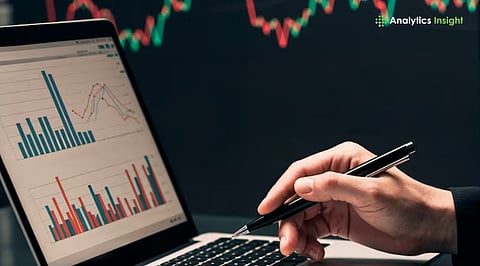
Core Visualization: Candlestick charts are the gold standard, providing a visual map of price movement through open, high, low, and close data points.
Technological Shift: 2026 introduces widespread AI-driven pattern recognition, allowing traders to automate the identification of complex formations.
Institutional Influence: Modern analysis focuses heavily on volume profiles to track the phases of large-scale institutional accumulation and distribution.
Reading cryptocurrency market charts involves a combination of technical analysis and on-chain data insights. With Bitcoin trading at approximately $88,000 and institutional ETFs influencing daily liquidity, accurate chart analysis is crucial for making better financial decisions.
By combining technical analysis with regulatory frameworks, traders can navigate volatile markets with greater accuracy. Whether you are a beginner or an experienced trader, this updated guide on how to read crypto market charts can help you make transactions with greater confidence.
Also Read: How to Choose a Crypto Exchange as a Beginner (Security, Fees, KYC)
The traditional green and red candlesticks are still the foundation, but 2026 traders are depending more on confluence, where multiple indicators overlap. For beginners, the Relative Strength Index (RSI) and Moving Averages (MAs) remain the main tools. An RSI over 70 is a common market overbought signal, while an RSI under 30 is a common market rebound signal.
Professionals, however, now focus on On-Chain Analytics. Platforms like Glassnode and Dune let traders track ‘whale’ movements and monitor exchange outflows in real time. If a chart shows a price ‘squeeze’ while exchange balances fall, it often indicates an impending supply shock.
In a market characterized by high liquidity, some chart patterns can still be considered more trustworthy than others:
The Symmetrical Triangle: Often observed in Bitcoin's recent trading range of $84,000 to $94,000, the pattern reflects an uncertain period before a strong breakout.
Double Bottoms (The ‘W’): This pattern has been a favorite among spot traders and has regularly indicated local bottoms in Ethereum (ETH), keeping the crucial $2,700 support level.
Volume Profile: The market experts have shifted their focus from ‘Volume over Time’ to ‘Volume at Price.’ This method reveals ‘High Volume Nodes,’ which are the most prominent support and resistance zones in a market controlled by institutional algorithms.
The 2026 market is likely to see more ‘fake-outs,’ in which the price briefly breaks a resistance level, then traps over-leveraged traders before reversing. To reduce this, experts recommend using the ‘Timeframe Filter.’ A breakout on a 15-minute chart is often only ‘noise,’ while a candle close on a 4-hour or Daily chart carries far more importance.
Furthermore, always track the Funding Rates on derivatives platforms like Coinglass. When rates are very high and the price stays near resistance, the chart is likely top-heavy and prepared for a correction.
Also Read: Best Crypto Security Practices for Beginners
Reading crypto charts isn't just about spotting patterns; it is about understanding the reason behind each price movement. The combination of traditional technical patterns with contemporary on-chain data and careful time frame analysis allows traders to minimize noise and detect setups with better probability.
By monitoring exchange inflows, whale accumulation, and network activity, you can verify if a breakout has true institutional backing. This approach turns market volatility into clear, actionable insights for navigating today’s digital asset market.
1. What are crypto charts, and why are they important for trading?
Crypto charts visually represent price movements, trading volumes, and trends. Understanding charts helps traders identify opportunities, predict market behavior, and make informed investment decisions in 2026.
2. Which types of crypto charts should beginners focus on first?
Beginners should start with line charts and candlestick charts. These provide clear visual insights into price trends, support and resistance levels, and overall market momentum.
3. How do technical indicators help in reading crypto charts?
Indicators like RSI, MACD, and moving averages help identify trends, momentum, and potential reversals. They assist both beginners and pros in making data-driven trading decisions.
4. Can beginners trade crypto using chart patterns alone in 2026?
Chart patterns provide guidance, but relying solely on them is risky. Combining patterns with volume analysis, indicators, and market news increases accuracy and reduces trading errors.
5. What tips can pros use to master crypto chart analysis?
Pros focus on multi-timeframe analysis, risk management, and advanced indicators. Staying updated with AI-driven market trends and blockchain news further enhances decision-making in 2026.
Join our WhatsApp Channel to get the latest news, exclusives and videos on WhatsApp
_____________
Disclaimer: Analytics Insight does not provide financial advice or guidance on cryptocurrencies and stocks. Also note that the cryptocurrencies mentioned/listed on the website could potentially be risky, i.e. designed to induce you to invest financial resources that may be lost forever and not be recoverable once investments are made. This article is provided for informational purposes and does not constitute investment advice. You are responsible for conducting your own research (DYOR) before making any investments. Read more about the financial risks involved here.
