.png)

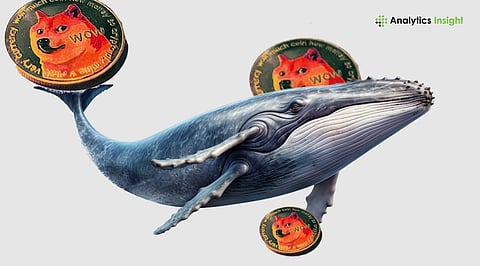
Dogecoin whale transactions have dropped to their lowest levels in two months.
Large holders are shifting funds to cold wallets while waiting for clearer market signals.
The new Dogecoin ETF may significantly influence future liquidity and the price of Dogecoin.
Large Dogecoin holders have greatly reduced their on-chain activity in recent weeks. Reports published around November 30 to December 1, 2025, show a clear fall in whale movements, especially in large transfers worth $1 million or more.
This sudden slowdown has surprised the market, as whale activity usually reveals major shifts in sentiment, liquidity, and price direction. The reduction has created a new wave of speculation about the reasons behind the silence in major wallets.
Also Read: Dogecoin ETF Launches With No Inflows: Will a Sell-Off Follow?
On-chain analytics platforms have recorded the lowest levels of whale activity seen in nearly two months. Hundreds of large-value Dogecoin transfers used to take place within the same time frame. This number has now fallen to well below 100. Reports based on Santiment’s on-chain data confirm that large transfers have dropped sharply.
During the same period, Dogecoin has been moving within a narrow price range. Since mid-October, the price has mostly stayed between $0.13 and $0.20. The decline in whale activity has happened alongside this stable but tight trading band, suggesting that major holders may be waiting for something before taking their next steps.
One possible reason for the slowdown is that whales may be holding their Dogecoin in cold storage. Cold wallets show little activity, yet their holdings remain intact. On-chain activity drops naturally when whales move their assets to offline wallets, even though the funds remain under the same owners' control.
Another explanation is that whales might have already taken profits earlier when Dogecoin rose toward the $0.20 level. After securing their profits, large holders tend to step back from trading to observe market trends. Reports from late November show a pattern that aligns with earlier profit-taking from major players.
A third reason could be related to larger market-wide factors. Whales often wait for major events to make their next move. One such key recent development is the launch of the Dogecoin-linked ETF in the United States. This new investment product alters how institutional investors can enter the Dogecoin market. Major holders may be waiting to see how ETF inflows or outflows shape market direction before acting again.
Dogecoin is trading between $0.13 and $0.14 at press time. Its market capitalization remains in the tens of billions. Although Dogecoin's trading volume remains above mid-year averages, the cryptocurrency has not shown consistent, strong liquidity. Volumes surge for brief moments, only to be followed by quiet periods in the market.
This kind of environment makes the influence of large holders even more important. When trading volume is uneven, a single major buy or sell order can move the price more sharply than usual. With whale activity currently low, the market has become more sensitive to smaller trades and retail-driven price moves.
Whale inactivity does alter how the market behaves. This means that smaller traders and retail investors can have a greater influence over price direction when whales remain silent. Without big liquidity from major wallets, the market becomes highly volatile, and even moderate buying or selling may result in a noticeable price swing.
At the same time, a lack of whale movement may signal a period of sideways trading. If whales are only holding or accumulating off-exchange, then the price may stay in a tight range until a new catalyst forces strong movement. The present pattern of stability in narrow-range prices is consistent with that interpretation.
Several developments may shape whale decisions in the coming weeks. On-chain platforms will continue to track whale transaction counts, exchange inflows, and exchange outflows. A rise in funds moving into exchanges normally signals selling pressure, while large outflows can signal accumulation.
Another major factor is the new Dogecoin ETF. Through ETF products, institutions can get exposure to Dogecoin through regulated markets. This might reshape demand for the token depending on how much capital flows into the ETF. If the ETF sees strong inflows, this might actually encourage whales to re-enter the market.
Other influences could include updates to the ecosystem, announcements by developers, or broader market movements. While Dogecoin does not have a built-in burn mechanism like some other cryptocurrencies, any new proposals that influence supply would be important to whales.
Decreased whale activity does not necessarily imply whales are losing interest in Dogecoin. Large holders may be very active in ways that are not on-chain. Some may be using custodial services, derivative positions, or over-the-counter trading, which do not appear on the public blockchains. These methods still allow whales to influence market conditions without leaving traditional on-chain footprints.
Social reactions have already begun, with some community members claiming manipulation or hidden strategies. Such reactions happen at every corner whenever whale behavior becomes difficult to read. However, silent wallets do not always translate into negative outcomes. In many cases, inactivity simply reflects strategy, not sentiment.
Also Read: Dogecoin at a Breaking Point: Will $0.08 Support Hold or $0.20 Resistance Win?
This halt in Dogecoin whale activity definitely points to a shift in the token's on-chain landscape. In early December 2025, whale transactions have fallen to levels not seen in months, while DOGE’s price has remained stable between $0.13 and $0.14. When whales go into temporary hibernation, the market will be highly dependent on retail behaviour, which could drive more volatility or extend the sideways trend for longer.
At the same time, the release of a Dogecoin ETF brings in a new dynamic that may influence future whale decisions. Close monitoring will be needed for large transactions, exchange flows, and ETF activity to show whether this quiet phase is temporary or indicative of a larger strategic shift.
1. Why have Dogecoin whales stopped moving their holdings?
Whale activity has slowed as many large holders shift funds to cold wallets or wait for stronger market signals before acting.
2. How does low whale activity affect the price of Dogecoin?
When whales stay inactive, retail traders have more influence, which can lead to sharper price swings or extended sideways movement.
3. Is the Dogecoin ETF influencing market behavior?
Yes, the introduction of a Dogecoin ETF has added a new factor for investors, and whales may be watching ETF inflows before making big moves.
4. Does low on-chain movement mean whales are selling?
Not necessarily. Whales can use cold storage, OTC desks, or custodial platforms that do not show frequent on-chain activity.
5. What price range is Dogecoin currently trading in?
Dogecoin has been mainly moving between $0.13 and $0.14 in early December 2025.
Join our WhatsApp Channel to get the latest news, exclusives and videos on WhatsApp
_____________
Disclaimer: Analytics Insight does not provide financial advice or guidance on cryptocurrencies and stocks. Also note that the cryptocurrencies mentioned/listed on the website could potentially be risky, i.e. designed to induce you to invest financial resources that may be lost forever and not be recoverable once investments are made. This article is provided for informational purposes and does not constitute investment advice. You are responsible for conducting your own research (DYOR) before making any investments. Read more about the financial risks involved here.
