.png)

Sci-fi doesn’t have to be complex. Beginner-friendly books focus on simple ideas and strong storytelling.
The right starting point matters. Easy, character-driven sci-fi makes the genre more enjoyable.
Many sci-fi books feel relatable. They connect with real emotions, not just futuristic concepts.
Science fiction can feel hard to approach at first. Many readers assume the genre depends on heavy science and complex theories. That belief often creates hesitation before even starting a book. The right stories remove that pressure and make the experience simple. These selections highlight clear storytelling and familiar situations. Let’s take a look at a few books that make sci-fi easy to enjoy.
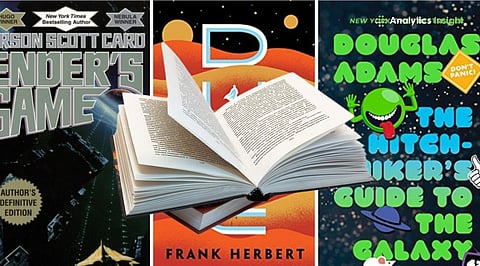
The book makes science fiction easy through a mix of humor and simple narration. The story follows Arthur Dent on a space journey after the Earth is destroyed. The writing keeps concepts clear and removes unnecessary complexity. Each moment introduces something strange yet understandable. The book keeps a smooth pace that supports easy reading. The tone stays playful while presenting sci-fi elements. This makes the book a reliable choice for beginners.
The book tells a survival story set on Mars with a clear structure. Andy Weir focuses on an astronaut who solves problems step by step to stay alive. The science is presented in a practical, easy-to-follow way. The book uses a log format, which keeps the narrative direct. Each challenge leads to a logical response that builds interest. The book focuses more on human effort than technical depth. This approach makes the book accessible to new readers.
Also Read: Best Sci-Fi Books of 2025: Must-Reads from New Scientist
The book explores a future where natural death no longer exists. Neal Shusterman presents a system where selected individuals control the population. The story follows two teenagers as they enter this role. The book focuses on moral decisions rather than scientific complexity. Each action shapes the emotional direction of the plot. The book keeps the writing simple and structured. This makes the book easy to understand for beginners.
The book builds its story within a spacecraft on a long journey. A frozen passenger wakes ahead of time and starts to observe the surroundings. Beth Revis develops a controlled environment filled with hidden truths. The story connects mystery with personal relationships in a simple structure. Each chapter uncovers new elements that keep interest alive. The book focuses more on characters than on technical aspects. This makes the book approachable for readers new to sci-fi.
The book introduces a setting where silence does not exist because thoughts are audible. A young boy begins to question the world after discovering something hidden. Patrick Ness uses a writing style that reflects noise but keeps it readable. The book keeps the pace active and centered on survival. The narrative avoids heavy science and focuses on human behavior. The book develops its story through emotions and decisions. This approach helps readers follow the concept without confusion.
The book builds its story around a global virtual reality game. Marie Lu introduces a teenage hacker who steps into a dangerous competition. The narrative connects advanced technology with familiar digital habits. The book explains each concept clearly and simply. Every event increases tension and keeps the story moving. The book stays engaging through action and relatable ideas. This makes the book an easy entry into modern sci-fi.
Also Read: 10 Sci-Fi Books That Predict the Future of Intelligent Robots
Science fiction becomes easier when the storytelling stays clear. These books reduce complexity and focus on human experiences. Each book introduces a concept without making it difficult. Readers can begin with any book and build confidence gradually. The genre becomes more enjoyable once the basics feel familiar.
1. Do beginner sci-fi books still include real science?
Yes, but the presentation stays simple and practical. Books like The Martian explain science through everyday logic. The focus remains on clarity instead of depth.
2. Can sci-fi reflect real-world problems without stating them directly?
Yes, many stories use futuristic settings to discuss present-day issues. Readers understand these ideas without feeling like they are reading something heavy. This indirect approach makes learning easier.
3. Why do some sci-fi worlds feel real despite being fictional?
Authors use small details that connect with real life. Familiar routines, emotions, and decisions make the world believable. This helps readers accept the setting easily.
4. Can sci-fi books improve pattern recognition?
Yes, many stories repeat subtle ideas in different forms. Readers start noticing links between events, characters, and outcomes. This sharpens observation skills.
5. Can sci-fi books influence how people view technology in real life?
Yes, they shape expectations about future tools and systems. Stories often make readers more aware of how technology affects daily life.
