.png)

Rs. 57 Crore Fresh Capital: Rs. 40 crore is earmarked for electric two-wheelers through Kinetic Watts & Volts.
Dealer and Product Expansion: The company is expanding its retail network while building a broader EV portfolio.
Scalability: Higher scooter volumes, margins and cash generation will determine whether the strategy succeeds.
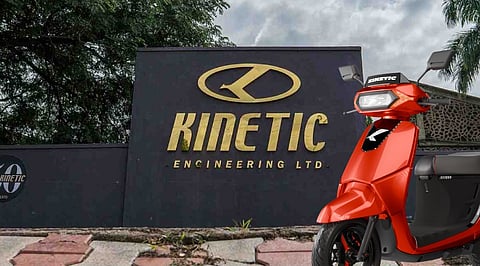
Kinetic Engineering has put fresh money behind its electric vehicle plan, with a focus on scooters, dealer growth, and EV parts. In September, promoters backed a Rs. 57 Crore investment. Kinetic Engineering plans to use Rs. 40 Crore for electric two-wheelers through Kinetic Watts & Volts and Rs. 17 Crore for plant and business needs.
The Rs. 57 Crore comes from the conversion of 44.51 lakh promoter warrants at Rs. 171 per share. The total warrant deal stands at about Rs. 76.1 Crore. Promoter ownership has risen from about 50% to 69.27% over four years.
Part of the Rs. 17 Crore links to driveline work for Europe and Mexico. Kinetic Engineering has cited possible orders worth about Rs. 500 Crore over seven years. That work sits outside the scooter business, but it can add another growth source for the wider company.
The Kinetic DX sits at the center of the EV plan. Kinetic Watts & Volts offers the DX in 2.6 kWh and 3.0 kWh forms. Prices start at Rs. 1,11,499 ex-showroom Pune for the 2.6 kWh version and rise to Rs. 1,18,599 for the 3.0 kWh model.
The DX+ adds a 2.6 kWh version at Rs. 1,21,174 and a 3.1 kWh version at Rs. 1,27,650. The 3.1 kWh DX+ has an IDC-certified range of up to 132 km. Kinetic also cites LFP battery tech, 37-liter storage and K-Coast energy recovery.
The product plan goes beyond one scooter. Company plans cover super-premium, premium, executive and mass products. The roadmap also covers electric motorcycles and delivery two-wheelers, with global markets on the roadmap from about 2027.
Also Read - How Long Does it Take to Charge an Electric Vehicle?
Kinetic Engineering has another key part of its EV plan. The group has links across vehicle parts, motors, controllers, displays, chargers and batteries. Kinetic Engineering makes EV-focused axles, trans-axles, chassis parts and gearbox assemblies. Kinetic Communications works on BLDC motors, motor controllers, displays, DC-DC converters and EV chargers.
Range-X adds battery capacity to the group. Its disclosed facility has annual capacity for 60,000 battery units and can make LFP and NMC batteries for group use and outside OEM sales. This setup gives Kinetic more control over key EV parts and can help manage cost and supply as volume grows.
The dealer network has grown fast. In August, Kinetic Watts & Volts had 111 dealer letters of intent and 30 active exclusive showrooms. By late September, the figures had reached more than 150 dealer letters of intent and more than 60 active dealerships. The network uses a 3S model for sales, service and spares.
An earlier company target called for 100 dealerships by October 2026 and 15,000 scooter sales for 2026. The longer plan calls for 400 to 500 or more dealer and service points, with a past target of about 250,000 units a year within five years.
The EV business remains small compared with major electric two-wheeler brands. Kinetic’s February 2026 investor presentation showed more than 600 cumulative EV sales and seven active Kinetic Watts & Volts dealerships at that point. The later dealer rise shows a wider retail reach, but dealer count alone does not prove equal growth in scooter demand or profit.
Kinetic Engineering also has a clear financial task ahead. Its first-quarter FY27 consolidated revenue stood at about Rs. 50.58 Crore, up 43.1% from a year earlier. The company posted a negative Rs. 9.85 Crore result at the core business level, while net profit stood at negative Rs. 12.97 Crore.
Why this Matters
Kinetic Engineering’s EV strategy matters as the company moves from a product relaunch toward larger-scale growth. Fresh capital, a wider dealer network and a broader EV product plan can shape its position in India’s electric two-wheeler market. The next phase will show whether these investments can create strong sales and profits.
The next test rests on scooter volume, dealer output, gross margin, and cash use. Kinetic Engineering has set ambitious goals, but those goals still need proof through sales and financial results. The dealer base, product range and EV parts setup now give the company a larger platform than it had at the start of its EV relaunch.
The Rs. 40 Crore EV allocation gives the DX business a stronger capital base. The next phase will show whether that capital can turn the revived Kinetic name into a large EV business with healthy margins and steady cash flow.
1. How much fresh capital has Kinetic Engineering raised for its EV strategy?
Kinetic Engineering has received about Rs. 57 crore through the conversion of 44.51 lakh promoter warrants, with Rs. 40 crore planned for electric two-wheelers.
2. Which EV scooter is central to Kinetic's product strategy?
The Kinetic DX and DX+ are at the center of the company's current electric two-wheeler product push.
3. How large is Kinetic's dealer network?
By late September, Kinetic Watts & Volts had more than 150 dealer letters of intent and over 60 active dealerships.
4. What other EV components does the Kinetic group make?
The group has capabilities across axles, trans-axles, chassis parts, gearboxes, BLDC motors, controllers, displays, chargers and batteries.
5. What is the biggest challenge for Kinetic's EV strategy?
The key challenge is converting its investment, products and expanding dealer network into sustained scooter volumes, healthy margins and positive cash flow.
