.png)

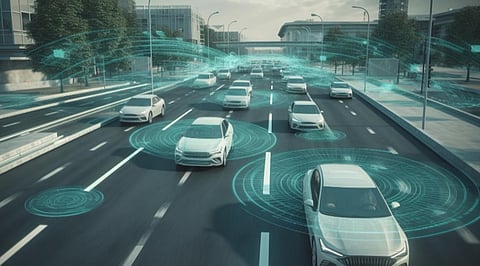
Radar and cameras identify nearby vehicles, pedestrians, and potential collision risks.
Sensor fusion combines multiple inputs to improve detection and hazard assessment.
Advanced driver assistance systems support safer driving but require constant driver attention.
Modern vehicles increasingly rely on cameras, radar, ultrasonic sensors, and artificial intelligence to detect hazards a driver might miss. These technologies form part of advanced driver assistance systems (ADAS), which can warn drivers about nearby vehicles, pedestrians, obstacles, and potential collisions. Some systems can also apply the brakes or assist with steering when a crash appears imminent. The aim is to give drivers an additional layer of awareness, not to replace their judgment.
Vehicle detectors use various technologies because no single sensor can always reliably identify all hazards.
Radar technology emits radio waves and uses their reflections to determine the presence of objects, their distance, and their relative speed. It detects other vehicles on the road, monitors traffic in neighboring lanes, and supports adaptive cruise control. Depending on the system and environment, this technology can work effectively in low-visibility conditions.
The camera captures road images and, using image-processing algorithms, recognizes lane markers, traffic signs, pedestrians, cyclists, and other road users.
Ultrasonic sensors detect nearby objects and alert the driver to approaching walls, other vehicles, or obstacles that are hard to notice from the driver's seat.
Light Detection and Ranging, or LiDAR, uses laser pulses to measure distances and create a 3D model of surroundings. This technology is sometimes used to identify objects and assess their position in advanced driver-assistance and automation systems.
Also Read: Jaguar Type 01 Electric Car: Design, Range, Performance, Price Revealed
Recognizing an object is the easy part. The software then has to decide whether the object poses a threat and if the driver needs to do anything about it.
Forward collision warning systems track what is happening in front of the vehicle and warn drivers if they are approaching another car too closely. In an impending collision, automatic emergency braking can take over if the driver doesn't react in time.
Blind-spot monitoring helps prevent accidents in blind spots, where cars might approach from behind but are outside the driver’s mirrors. The sensors watch for other cars and provide a visual or audio signal if they detect one while you try to change lanes.
Another system is rear cross-traffic alert, which helps prevent accidents when reversing. Pedestrian detection systems detect people in front of the vehicle and sometimes initiate emergency braking.
Lane departure warning systems use cameras to detect when a vehicle drifts out of its lane without a lane-keeping sign.
Each sensor also has disadvantages. Cameras can struggle with glare, darkness, or poor visibility. Radar provides distance and motion information but lacks the visual detail a camera can provide. Ultrasound sensors work effectively only within a limited range, whereas LiDAR performance depends on the environment.
To overcome these disadvantages, some cars use data from several sensors simultaneously. This is called sensor fusion and lets the car's software compare results and build a more complete picture of the situation.
For example, a camera may recognize a pedestrian, while radar shows how fast the car is moving toward him. Combining these two factors makes it possible to determine whether an alarm or braking is needed.
Also Read: Volvo EX90 vs Mercedes-Benz EQS SUV: Which Luxury Electric SUV Offers More Value?
Although detection technologies have advanced, no method can ensure that all hazards will be detected. Weather conditions, covered sensors, poor road markings, unexpected obstacles, and rapid motion may affect how the system operates. False alarms can occur too.
The US National Highway Traffic Safety Administration advises drivers to remain vigilant even when the vehicle offers multiple assistance features. Systems support the driver, and they vary from one car to another.
Drivers need to be familiar with their car's features, keep cameras and sensors clean, perform maintenance correctly, and know when the system may not operate properly. The vehicle sensor system adds safety by detecting hazards and responding appropriately. This is possible only with a reliable system and an aware driver.
1. How do vehicle sensors detect hidden road hazards?
Vehicle sensors use radar, cameras, ultrasonic waves, and LiDAR to identify obstacles, monitor movement, and alert drivers about potential dangers.
2. What is sensor fusion in modern vehicles?
Sensor fusion combines information from multiple sensors, helping vehicles understand their surroundings and more accurately assess potential collision risks.
3. Can vehicle sensors prevent accidents completely?
No, vehicle sensors cannot eliminate accidents. Poor weather, technical limitations, unexpected obstacles, and driver behavior can affect detection accuracy and performance.
4. Which vehicle sensors help prevent collisions?
Radar, cameras, ultrasonic sensors, and LiDAR support collision avoidance by detecting hazards, monitoring blind spots, enabling emergency braking, and assisting with parking.
5. Do drivers still need attention when using ADAS?
Yes, drivers must remain attentive because ADAS supports driving but cannot replace human judgment or guarantee complete safety.
