.png)

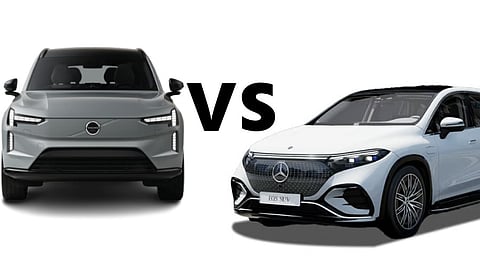
The Volvo EX90 and Mercedes-Benz EQS SUV compete in the premium electric SUV market, but they prioritize different aspects of ownership.
Volvo focuses on family practicality, understated Scandinavian design, safety features, and charging improvements. Mercedes-Benz places greater emphasis on cabin refinement, digital technology, ride comfort, and performance in higher trims.
The comparison covers starting prices, estimated driving range, charging performance, interior space, driving dynamics and technology.
Luxury electric SUVs are expected to do more than deliver impressive acceleration. Buyers want a comfortable cabin, useful technology, dependable range, and enough space for everyday family life. The Volvo EX90 and Mercedes-Benz EQS SUV approach these priorities differently. Volvo puts safety, understated design and family-friendly practicality at the center of its offering, while Mercedes-Benz focuses on high-end comfort, advanced infotainment and a more traditional luxury experience.
Both are premium electric SUVs, but their prices, equipment and driving characteristics appeal to different buyers. The better value depends on whether you prioritize affordability and practical features or a more indulgent cabin and powerful performance.
The Volvo EX90 has the advantage on entry price in the US market. The 2026 model starts at approximately USD 78,090, while the Mercedes-Benz EQS SUV range starts at USD 89,950 for the EQS 400 4MATIC. Prices vary by trim, options, destination charges, and market.
That difference gives Volvo an appealing starting point for buyers who want a large, premium electric SUV without stretching their budget as far. It also leaves more room for optional equipment or home-charging installation.
Mercedes-Benz commands a higher price, particularly for its more powerful versions. In return, buyers get a luxury-focused package with sophisticated suspension technology, premium cabin appointments and an extensive infotainment system. The final comparison should include insurance, servicing, charging costs, warranties, and the equipment fitted to each vehicle, not just the advertised starting price.
Also Read: Fast charging Volvo ES90 India Launch: Expected Price, Range, Features, and More
Range matters most when an electric SUV is expected to handle long journeys as well as daily commuting. In the US, Volvo estimates up to 305 miles for selected 2026 EX90 all-wheel-drive configurations, depending on wheel size and specification. The entry-level single-motor version has a different range rating.
The 2026 Mercedes-Benz EQS 400 4MATIC is rated for up to 312 miles, while the EQS 550 4MATIC offers up to 317 miles under US EPA estimates. That gives the Mercedes a modest advantage in maximum quoted range, depending on which versions are compared.
Volvo has notably improved the EX90's charging hardware for 2026, introducing an 800-volt electrical architecture. Under suitable conditions, the company said the vehicle can charge from 10% to 80% in as little as 22 minutes. Mercedes lists a charging rate of up to 200 kW for the 2026 EQS SUV, with a similar charging session taking around 30 minutes. Actual results depend on battery temperature, charger capability, and other conditions.
The EX90 takes a clean, Scandinavian approach to luxury. Its cabin features a minimalist layout, a large central touchscreen, and a focus on comfort over visual excess. Seating for up to seven makes it attractive to larger families, though third-row space and luggage capacity should be checked in person.
The EQS SUV delivers a more traditional premium experience, with rich interior materials, ambient lighting and an emphasis on passenger comfort. Mercedes' MBUX infotainment system provides voice control and a range of digital functions, while available air suspension helps smooth out uneven roads.
Both SUVs handle family duties, but they appeal to different buyers. Volvo suits buyers who prefer a calm, restrained cabin; Mercedes appeals to those who want their vehicle to feel like a high-end lounge on wheels.
Also Read: Bentley Torcal Electric SUV Confirmed Ahead of September Global Debut
The EQS SUV offers strong performance across its lineup. The 2026 EQS 400 4MATIC produces 355 horsepower, while the EQS 550 4MATIC delivers 536 horsepower. The latter is the better choice for drivers who want rapid acceleration alongside a comfortable ride.
The EX90 also offers several powertrain options, including a Twin Motor Performance version designed for stronger acceleration. Its appeal extends beyond outright speed, with Volvo placing considerable emphasis on driver assistance, collision avoidance and everyday confidence.
Neither vehicle is designed as a lightweight sports SUV. Both prioritize a refined, quiet driving experience, but the Mercedes offers a particularly compelling performance option at the top end.
Technology is central to both vehicles. The EX90 combines Google-based infotainment features with connected services and driver-assistance systems. Its 2026 upgrades include a more powerful core computer and expanded safety functions, with some features and availability varying by market.
Mercedes counters with MBUX, navigation that considers charging stops and route conditions, and available AIRMATIC air suspension. Its digital cabin is feature-rich, although buyers should make sure the touchscreen-heavy interface feels intuitive during a test drive.
Volvo's safety-focused approach may appeal to families who value driver assistance and collision prevention. Mercedes puts greater emphasis on combining digital convenience with comfort. In either case, assistance systems support the driver; they do not replace attentive driving.
The Volvo EX90 is the stronger value proposition for buyers who want a spacious, safety-focused electric SUV with modern charging technology and a lower starting price. Its restrained styling and available seven-seat layout make it a practical choice for family use.
The Mercedes-Benz EQS SUV suits buyers who prioritize cabin luxury, ride comfort, infotainment, and stronger performance in the upper trim. Its higher price can be justified if those features matter more than keeping the initial outlay low.
Ultimately, there is no universal winner. Compare equivalent trims, local prices, charging access, and standard features. A test drive with the whole family, plus a realistic look at your typical journeys, will show which SUV offers the best value for your needs.
The Volvo EX90 generally has a lower starting price in the US market. The article lists the 2026 EX90 at approximately USD 78,090, compared with USD 89,950 for the Mercedes-Benz EQS 400 4MATIC. Actual prices depend on trim, optional equipment, destination charges and market. Buyers should compare similarly equipped versions before deciding which offers better value.
The Mercedes-Benz EQS SUV has a slight advantage in the maximum US EPA range figures cited in the comparison. The EQS 400 4MATIC is rated for up to 312 miles, while the EQS 550 4MATIC reaches up to 317 miles. Selected Volvo EX90 configurations offer an estimated range of up to 305 miles. Actual range varies with weather, speed, wheels and driving conditions.
The updated 2026 Volvo EX90 uses an 800-volt electrical architecture, with Volvo claiming a 10% to 80% charging time of as little as 22 minutes under suitable conditions. The Mercedes-Benz EQS SUV supports charging at up to 200 kW, with a similar session taking around 30 minutes. Actual charging times depend on battery temperature and charger performance.
Yes. The Volvo EX90 offers seating for up to seven, making it a practical option for families who need additional passenger capacity. Its safety-focused technology and spacious cabin add to its appeal. However, buyers should check third-row legroom, child-seat installation, luggage space and access to the rear seats before making a purchase.
The EQS SUV emphasizes premium interior materials, ambient lighting, advanced MBUX infotainment and a comfortable ride. Available AIRMATIC air suspension helps improve ride quality, while higher-performance variants offer substantial power. These features make it appealing to buyers who prioritize cabin refinement, digital convenience and a more indulgent driving experience.
