.png)

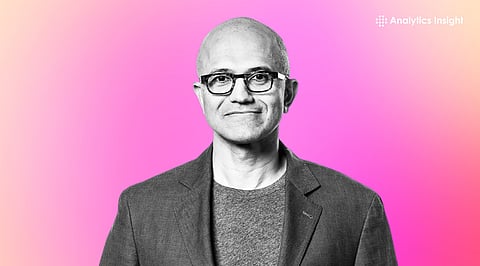
In the boardrooms and hallways of Microsoft's Redmond headquarters, a new mantra has taken hold: adapt to the AI revolution or step aside. Satya Nadella is pushing his executives with intensity and urgency, demanding that his leadership team either embrace the grueling pace of artificial intelligence development or consider their future elsewhere. For a CEO known for his empathetic leadership style, this represents a dramatic shift, one that reveals just how seriously Nadella views the stakes of the AI race.
Since becoming CEO in 2014, Nadella has orchestrated one of the most remarkable corporate transformations in tech history, growing Microsoft's market value tenfold to over $3 trillion. Yet despite this success, he carries the scars of Microsoft's past failures, the missed opportunities in mobile phones, tablets, and web browsers that allowed competitors to surge ahead. He knows from experience that when a paradigm shifts, companies without relevant contributions lose their right to exist.
That historical awareness drives Nadella's current all-in bet on AI. Over five years, he has committed $13 billion to OpenAI, the company behind ChatGPT, even before it turned profitable. He absorbed most of Inflection AI's staff in a $650 million deal, entrusting cofounder Mustafa Suleyman with billions of dollars of Microsoft's business. These aren't cautious hedges; they're bold wagers from a leader who understands that hesitation in technology's inflection points can prove fatal.
The intensity of Nadella's AI push has reshaped Microsoft's internal culture. He recently created a new CEO of Commercial Business position, appointing Judson Althoff to the role, allowing himself to concentrate exclusively on what he calls the company's highest ambition, technical work. In internal memos, he's direct about expectations, telling teams they must rapidly learn new skills and adopt new working methods. Some veteran executives now face a stark choice: embrace the relentless pace or leave.
This urgency extends beyond mere executive pressure. Nadella launched weekly AI accelerator meetings and dedicated Teams channels, where junior technical fellows, not traditional executives, are encouraged to share innovative ideas. Capital expenditures have surged, with the company spending $14 billion in early 2024 alone on GPUs and data centers, and costs expected to keep rising through 2025.
Yet Nadella's approach isn't reckless gambling. When OpenAI's board briefly fired Sam Altman in late 2023, Nadella offered jobs to all OpenAI employees, essentially neutralizing the board's threat and clearing the path for Altman's return. Since then, he's strategically reduced Microsoft's dependence on OpenAI by investing in French AI lab Mistral and building internal teams to develop competing large language models.
The strategy appears to be working. Azure's AI services are projected to generate $4 billion in annual sales, and the company attributed 7% of Azure's 31% sales growth in early 2024 to artificial intelligence. Microsoft has closed the gap with Amazon's AWS, claiming initiative in cloud computing for the first time.
Still, questions linger about whether this breakneck pace is sustainable. Reports suggest that adoption of Microsoft Copilot remains tepid, raising investor concerns about returns on multibillion-dollar AI investments. Some Microsoft veterans are questioning how much longer they can maintain the intensity Nadella demands.
But Nadella remains undeterred. He describes the current moment as a tectonic AI platform shift, one requiring the company to simultaneously manage its existing business while building an entirely new frontier. For a leader who once marketed Microsoft Excel in oversized glasses back in 1993, the stakes couldn't be clearer. He believes AI could fundamentally accelerate science, leading to new disease cures and pathways away from fossil fuels.
In the end, Nadella's message to his leadership team reflects his conviction that this moment demands nothing less than total commitment. The polite, empathetic CEO who revitalized Microsoft's culture hasn't disappeared; he's simply betting everything that his company won't miss another technological revolution. For those unwilling to match his intensity, the message is clear: the future of Microsoft belongs to those prepared to grind through the AI transformation, no matter the cost.
