.png)

AI chatbots can be useful for learning, but they should never replace a real human connection.
Open conversations and clear boundaries help parents guide kids without creating fear or secrecy.
The biggest risk appears when emotional reliance on AI affects a child’s mental health.
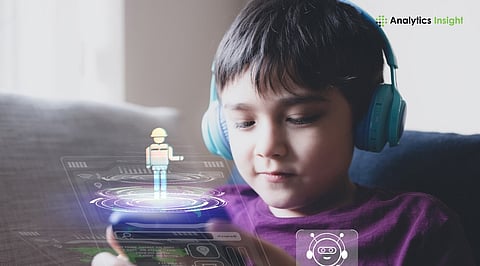
Conversations about children and AI chatbots are now a standard part of many internet users' lives. Kids are using AI tools for school assignments, expressing their creativity, and even socializing.
Chatbots like ChatGPT are frequently used in educational settings, while AI companions are designed to mimic human interactions, offering kindness and responsiveness, almost like digital friends. While this can be beneficial, it also raises concerns that parents may not have previously considered.
Technology is evolving faster than most families can keep up with, and fear-based reactions rarely work. Experts suggest that good guidance, conversation, and setting clear boundaries will have a better impact than just outright banning or panicking.
The most effective way to understand your child’s relationship with AI chatbots is also the simplest: ask them. Experts in child psychiatry consistently emphasize the importance of direct, non-judgmental conversations.
“The best way to know if your child is using AI chatbots is simply to ask, directly and without judgment,” said Akanksha Dadlani, a Stanford University child and adolescent psychiatry fellow.
Parents can ask how their child uses AI, what they like about it, and whether anything has ever made them feel uncomfortable. Grace Berman, a New York City psychotherapist, notes that regular conversations make it “easier to catch problems early and keep AI use contained.” Being upfront about safety concerns and monitoring expectations helps avoid secrecy and builds trust.
Many kids know how to use AI but don’t fully understand what it is. That gap can create emotional confusion. Parents can explain that chatbots like ChatGPT are not thinking beings.
AI chatbots are nothing but prediction systems. They generate answers using the same patterns but do not rely on human feelings or intentions. Berman suggests clarifying that the chatbots are neither real friends nor therapists, and that they may at times provide incorrect or misleading responses.
Discussing issues like privacy and data storage, as well as the reasons for making specific bots user-engaging, makes it easier for kids to see AI as a tool rather than a relationship.
Experts say the answer lies not in the technology but in its application. Using occasional, guided chatbots for educational or creative purposes is generally considered harmless. Concerns arise when chatbots become substitutes for human interaction or emotional support.
“There is much we don’t yet know about how interacting with chatbots impacts the developing brain,” Berman said, especially around social and emotional development.
As research is still emerging, there is no clearly defined “safe amount” of use. That uncertainty makes supervision, conversation, and balance essential. The risk is not curiosity. It’s emotional reliance and isolation.
Parents often ask how to protect their children from AI risks without altogether banning the technology. Experts recommend a layered approach.
Tools like Apple Screen Time and Google Family Link can help set time limits, manage downloads, and monitor usage. Keeping devices in shared spaces rather than bedrooms can also reduce secrecy. Still, safeguards are imperfect. “Monitoring tools can also be appropriate,” Dadlani said, but they are not foolproof.
Children watch and learn from how adults use technology. “Model healthy AI use yourself,” Dadlani said. Kids notice and follow behavior more than rules.
Parents can talk openly about when AI helps them and when human input matters more. Mitch Prinstein from the American Psychological Association recommends that parents engage in a critical discussion about AI rather than just putting it on the list of forbidden topics.
Not every single mood change is an indication of a problem. It is a regular part of adolescence that teenagers want to be left alone. Even then, the parents should look for signs that may be closely linked to chatbot use.
Red flags include withdrawal from social relationships, increased secrecy, emotional distress when AI access is limited, disinterest in activities, sudden grade changes, irritability, changes in sleep or eating habits, and treating a chatbot like a therapist or best friend.
“The concern is not curiosity or experimentation,” Dadlani said. “The concern is the replacement of human connection and skill-building.”
If a child routinely relies on AI chatbots while withdrawing from peers, family, and daily life, experts recommend tightening limits and involving a mental health professional. Helping children to keep an optimistic view of artificial intelligence is expected to become a routine part of modern parenting.
Note: The data and the statements are taken from different sources.
1. Are AI chatbots safe for children to use every day?
AI chatbots can be helpful, but daily use needs balance and supervision to avoid replacing real conversations or emotional support.
2. How can parents protect kids from AI risks without banning technology?
By maintaining their involvement, defining precise limits, activating parental controls, and having candid discussions about the capabilities and limitations of AI, they can ensure that their children are safe.
3. Should parents read their child’s chatbot conversations?
It can help in some cases, but it works best when children know it’s about safety, not punishment or spying.
4. What signs suggest a child may be relying too much on AI chatbots?
Withdrawal from friends, secrecy, mood changes, or treating a chatbot like a trusted confidant can signal over-reliance.
5. When should parents consider professional help?
If AI use starts affecting relationships, daily routines, or mental health, a mental health professional can offer guidance.
