.png)

AI tools such as deepfakes and chatbots are making interview fraud more common in remote hiring.
Strong identity checks and live interaction are essential to confirm real candidates.
A mix of technology, policies, and trained interviewers is the best defense against AI misuse.
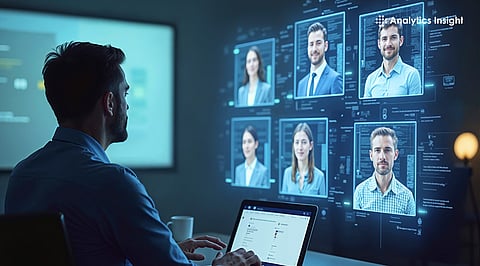
Artificial intelligence is creating a new recruitment risk in remote hiring. Deepfake video tools, voice cloning software, and AI chatbots can now mimic real people and provide interview answers in real time. Cybersecurity researchers reported an alarming increase in such cases in 2025, where fake candidates used synthetic video and audio to pass technical and HR interviews.
Some companies unknowingly hire applicants who are not the same as the person interviewed on screen, resulting in financial losses and security breaches. Industry reports, as cited by CBS News, suggest that one in four applications will likely be an AI-related hiring fraud by 2028. These crimes may happen due to easy access to generative AI tools and the expansion of remote work.
Traditional interview checks, such as resumes and simple video calls, cannot confirm if the person attending the interview is real and matches their documents. HR teams have to use layered identity verification methods such as government ID checks, live selfie verification, and biometric ‘liveness’ tests to ensure the person is physically present and not a pre-recorded or AI-generated video.
Using these checks in applicant tracking systems makes verification part of the normal hiring process rather than an optional step. This reduces the chance of impersonation and improves overall trust in remote recruitment.
Real-time challenge questions are an effective defense against AI manipulation. Candidates may be asked to perform small, spontaneous actions, like turning their head, reading an unexpected text, or answering a question about a personal experience. Deepfake systems cannot recreate these actions naturally and quickly.
Delayed responses, unnatural eye movement, or mismatched lip and voice timing can also hint at possible AI use. Recent detection studies show that live challenge-response methods can help prevent AI-based impersonation attempts.
Also Read - Generative AI Tools: A New Era in HR Management
Unstructured interviews make it easier for candidates to depend on AI-generated scripts. Structured interviews focus on job-related competencies and experience, which is difficult for AI to fake.
Work samples, short, live problem-solving exercises, and role-specific simulations help measure real skills rather than memorized or generated responses. Research published in 2024 found that asynchronous video interviews were especially vulnerable to AI assistance, emphasizing the need for live evaluation in important hiring stages.
Several HR technology vendors now offer AI tools that detect deepfake audio and video. These systems analyze facial movements, voice patterns, and visual inconsistencies to flag suspicious interviews for review. While helpful, these tools must be used carefully.
False positives can harm genuine candidates, so human review and auditing are essential. The best results come from combining automated detection with trained interviewers who understand how to interpret warning signs.
Organizations must update hiring policies to define acceptable and unacceptable AI use during interviews. Misrepresentation should be clearly stated as a violation of hiring rules. Transparency is also critical. Employers must inform candidates about identity checks and AI detection tools to avoid privacy and legal issues.
In recent legal cases involving AI screening tools, courts and regulators have highlighted the need for fairness, data protection, and accountability in automated hiring decisions.
Interviewers need training to recognize suspicious behavior and follow proper procedure when fraud is suspected. An incident response plan should explain how to pause the hiring process, collect evidence, and re-verify the candidate's identity.
Security teams and legal departments should be involved if fraud is confirmed. Reports from cybersecurity analysts in 2025 link fraudulent hiring directly to later data theft and insider threats, showing that early detection is critical.
High-risk roles, such as those with access to sensitive systems or financial data, need stronger verification and, in some cases, in-person confirmation before onboarding. For general hiring, HR teams should introduce controls gradually, measure their effectiveness, and improve them over time. Continuous monitoring and periodic audits help ensure these defenses stay effective as AI tools evolve.
Also Read - Is Agentic AI the Next Tech Disaster Waiting to Happen?
AI-enabled interview fraud is now a serious and growing challenge for remote hiring. A combination of identity verification, live interaction, structured assessments, detection technology, strong policies, and interviewer training creates a safer hiring environment. However, technology alone is not enough. A balanced approach that includes people and legal safeguards is the most reliable way for HR teams to protect recruitment integrity.
1. Why is AI a threat to remote interviews?
AI can generate fake videos, clone voices, and provide real-time answers, making it hard to know if the candidate is genuine.
2. What are deepfake video tools used for in interviews?
They can impersonate another person by creating realistic video and audio during live or recorded interviews.
3. Can AI chatbots help candidates cheat in interviews?
Yes, AI chatbots can generate instant responses, scripts, and technical answers, which can reduce the accuracy of skill assessment.
4. How can HR teams detect AI-based impersonation?
By using identity verification, live challenge questions, structured interviews, and AI detection software with human review.
5. Are there legal risks in using AI detection tools?
Yes, companies must ensure transparency, data privacy, and fairness to avoid legal and compliance issues.
