.png)

Smarter diagnostics: AI algorithms analyse complex medical images with speed and precision, supporting early disease detection.
Radiology and pathology innovation: Machine learning assists clinicians in interpreting scans and tissue samples more accurately.
Workflow efficiency: AI-powered imaging tools reduce manual workload, improve consistency, and enhance clinical decision-making.
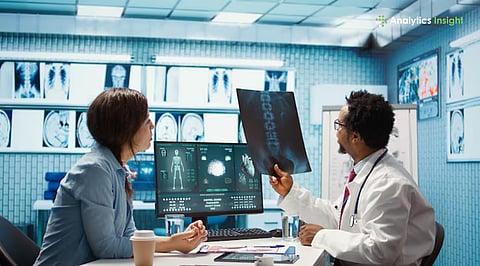
Artificial intelligence has become a foundational technology in the modern healthcare sector, especially in medical imaging. From detecting abnormalities in radiological scans to analysing cellular patterns in pathology slides, AI has been changing how clinicians should interpret visual medical data. A huge amount of data is generated every day in hospitals, and it's difficult for traditional diagnosis methods to manage this information accurately and efficiently.
AI, machine learning, deep learning, and advanced computing help transform imaging data into clinical insights. AI doesn’t replace medical professionals; instead, it works as an intelligent assistant that helps radiologists, pathologists, and clinicians identify patterns that they may miss otherwise.
Medical imaging is at the center of diagnosis and treatment planning. However, the growing complexity and volume often overwhelm specialists. AI smoothly addresses the challenge and automates pattern recognition. It standardises image analysis across clinical settings.
In Radiology, AI models are trained on thousands of X-rays, CT scans, and MRIs to identify tumors, fractures, and organ abnormalities with proper training. Deep learning systems use convolutional neural networks to detect small visual details that human observers often miss. This ability makes early detection of serious conditions like lung cancer, cardiovascular disease, and neurological disorders possible.
AI even improves workflow. It is now capable of prioritizing critical cases, flagging critical findings, and assisting with preliminary interpretations. Radiologists can simply focus on their expertise to treat complex cases and offer clinical judgments. The well-balanced combination of speed and accuracy enhances patient outcomes and reduces diagnostic delays.
To support this level of performance, many healthcare organisations rely on cloud-based medical imaging platforms like Studycast, which centralise image management, streamline collaboration between departments, and ensure secure, scalable access to diagnostic data across locations.
In pathology, AI has a vital role. Digital pathology slides and whole-slide imaging generate enormous datasets, and each of these slides requires a careful review. With the AI algorithms, it is now easy to analyze tissue samples, identify malignant regions, quantify cellular features, and assist in disease classification. This reduces sole dependence on pathologists and supports more consistent diagnoses across institutions.
The combination of imaging data with clinical history and molecular information makes AI in pathology contribute to precision medicine. It offers tailored treatment strategies and links visual patterns to disease progression and therapeutic response.
AI-powered scans are newly introduced medical features that go far beyond mere interpretation. These scanning methods improve how medical images are created, processed, and utilized. All the imaging types, including MRI, CT, and PET scans, produce data that must be reconstructed into clear visual outputs. Traditional reconstruction techniques work, but they are time-consuming and expensive.
AI-based reconstruction makes these processes better with improved image clarity and reduced noise. This process is particularly valuable because it reduces patient exposure to radiation while maintaining a similar diagnostic quality. Faster reconstruction allows approximately real-time imaging, which is crucial for surgical planning.
Additionally, AI systems provide advanced capabilities for segmentation and three-dimensional visualization, which enables doctors to study human body parts through interactive methods. The surgical planning process becomes more accurate while oncologists gain better methods to monitor cancer development and treatment outcomes.
The AI-based imaging systems enable healthcare organizations to implement standardized practices throughout their facilities. The hospitals use standard algorithms and protocols to achieve consistent diagnostic results, regardless of their location or the equipment used for imaging. The ability to expand makes artificial intelligence necessary for operation in both major healthcare facilities and areas with limited medical resources.
Also Read: Is AI Helping Doctors or Hiding Medical Negligence?
AI is rapidly progressing. With the advancements, artificial intelligence has become an inseparable part of every other sector, including medical imaging. The use of AI technologies reshapes radiology, pathology, and diagnostic scanning at every level. It not only enhances accuracy but also speeds up workflows and supports clinical decision-making. These features combined enable healthcare professionals to drive more accurate diagnoses and personalized care.
The more healthcare technologies evolve, the more their role will expand from diagnostic support to predictive analytics and treatment optimisation. The future of medical imaging now lies in collaboration. Human expertise can’t be replaced, but artificial intelligence can assist them to improve patient outcomes and redefine the standards of modern healthcare.
What is AI in medical imaging used for?
Ans: AI in medical imaging is used to analyse radiology scans and pathology images, improve diagnostic accuracy, and streamline clinical workflows.
Does AI replace radiologists and pathologists?
Ans: No. AI assists professionals by enhancing accuracy and efficiency, but final diagnostic decisions remain with medical experts.
Which imaging areas benefit most from AI?
Ans: Radiology, pathology, oncology imaging, and surgical planning benefit significantly from AI-powered analysis.
Are AI-powered scans safe for patients?
Ans: Yes. AI can even reduce radiation exposure by enabling high-quality imaging with lower doses.
Is AI in medical imaging widely adopted?
Ans: Adoption is growing rapidly, with hospitals and diagnostic centres increasingly integrating AI into routine imaging workflows.
