.png)

Gemini 3.7 Flash cuts token costs in half, making AI agents cheaper to build and run.
The Pixel 11 lineup shifts more AI processing onto the device itself, led by the new Tensor G6 chip.
Search, student access, and new enterprise FinOps tools extend Gemini into daily use and business budgets alike.
Google's August 2026 push was more than another month of product launches. It marked a shift in strategy, with Gemini moving from a standalone assistant into the backbone of Google's wider ecosystem. A cheaper model now targets developers who build AI agents. New Pixel phones handle more AI work directly on the device.
Search now includes tools that help people learn. Enterprise customers gained better control over AI spending. Each move solves a different part of the same puzzle: price, access, daily use, and business trust. Google is not relying on one big breakthrough. It is spreading Gemini across the tools people already use, making AI feel built in rather than separate.
The month covered pricing, hardware, adoption, and enterprise tools all at once. A table makes the spread easier to follow than a long list of separate paragraphs would.
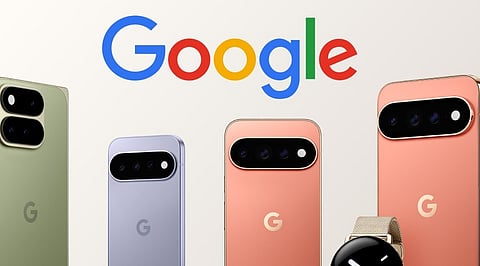
The Pixel 11 event covered four new phones, a smartwatch, and a tracker. The chip numbers and camera details are easy to list, but they are not the real story. The real shift is where the intelligence lives. Tensor G6 handles AI tasks like photo processing directly on the device, without sending data to the cloud first.
Gemini can now chain tasks across dozens of apps without step-by-step prompts from the user. Voice input also got smarter with a feature called Rambler, designed to follow how people actually speak rather than expecting clean commands. Pixel Tag links into the same device network as the rest of the lineup, turning a single tracker into part of a wider system.
Each piece adds a small convenience on its own. Stacked together, they turn the phone into a control point for Gemini rather than one app among many. That distinction matters when deciding whether the upgrade is worth the price. A faster camera sensor is a nice bonus. An AI assistant woven quietly into the entire operating system is a different kind of product altogether.
Two numbers from August explain more than any feature list could. The first is one billion. That is how many people now use the Gemini app every month, a scale that puts it alongside Search and Gmail, among Google's biggest products.
The milestone landed the day before the Pixel event, which suggests Google wanted the scale story told on its own before the hardware news arrived.
The second number is the price cut behind Gemini 3.7 Flash, which fell to half of what the previous model charged per token. Lower prices tend to invite more experimentation, and more experimentation tends to raise total spending even as the per-task cost drops.
This pattern likely explains why Google paired the price cut with new FinOps tools for enterprise customers on 26th August. This gives businesses a way to plan a budget around AI agents that run more often than expected.
Also Read: Google September Android Drop: New AI Features Added to Phones
None of August's announcements needed the others to make sense on their own. A phone launch works without a pricing change. A study tool in Search works without an enterprise dashboard. But placed side by side, the announcements describe a single approach.
Google is not trying to win attention with one dramatic launch. It is building Gemini into the daily paths people already take through search, work, and their phones.
A billion monthly users suggests that approach has already found real traction, and the FinOps tools suggest Google expects that traction to keep growing past what a single product page can capture.
Also Read: Google Gemini's New E-Book AI Feature: What It Can Do for Readers
The next phase of this strategy will not be measured by new model names or fresh hardware specs. It will be measured by how invisible Gemini becomes inside the tools people already open every day. The companies that win the next stage of AI adoption may not be the ones announcing the most features. They may be the ones nobody notices switching to.
1. What were the major Google AI updates in August 2026?
Google introduced Gemini 3.7 Flash, launched the Pixel 11 series, expanded AI features in Search, added creative and developer tools, and introduced new enterprise AI cost-management capabilities.
2. What is Gemini 3.7 Flash?
Gemini 3.7 Flash is a lower-cost Gemini model designed for coding, web development, and AI agent workloads, making large-scale AI deployment more economical.
3. What makes the Pixel 11 lineup significant for AI?
The Pixel 11 series uses Tensor G6 and integrates Gemini more deeply into device functions, enabling supported AI workloads, proactive assistance, and connected-device experiences.
4. How is Google expanding Gemini beyond its standalone app?
Google is integrating Gemini across Search, Pixel devices, developer tools, creative workflows, education features, and enterprise platforms instead of limiting it to a single application.
5. Why are enterprise FinOps tools important for Gemini?
Lower AI costs can encourage greater usage and increase overall spending. FinOps tools help enterprises monitor, manage, and plan AI expenses as agent-based workloads expand.
