.png)

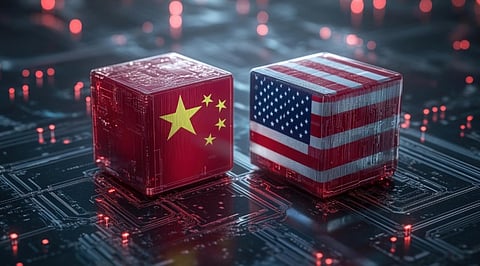
US restrictions on China's access to advanced AI chips have further pressured Chinese technology stocks, while adding urgency to Beijing's efforts to build a self-reliant semiconductor industry. The latest measures have raised concerns about the country's ability to develop advanced AI models and expand computing capacity without relying on US technology.
The restrictions come amid a broader escalation in the US-China technology rivalry, which is increasingly extending beyond semiconductor exports to cloud computing, software and corporate disclosures.
Chinese technology companies have faced several setbacks this week, including US restrictions on remote access to advanced AI chips, NVIDIA's suspension of some chip shipments to China and a shareholder lawsuit against Alibaba.
Washington has also proposed rules that could require American companies to disclose their use of Chinese AI models. Z.AI and MiniMax shares have fallen 22% and 34%, respectively, over the past two weeks.
Neil Shah, vice president of research at Counterpoint Research, said closing the technology gap at the leading edge before 2028, or even by 2030, would be difficult. He added that restrictions would affect advanced AI model training more than inference workloads.
Executives at Alibaba and Tencent acknowledged that the latest US restrictions would tighten computing capacity, although their assessments of the immediate impact differed.
Tencent President Martin Lau said the company's cloud business would remain largely unaffected because its AI services rely mainly on inference workloads that can run on domestic chips. However, he warned that the restrictions could slow development of Tencent's next-generation AI model in the near term.
Alibaba CEO Eddie Wu said the new rules would affect the company's products and services next year. The restrictions could also force Alibaba to reconsider its long-term target of building 20 gigawatts of computing capacity.
The company maintained its goal of generating $100 billion in external cloud revenue by 2030. However, it expects cloud revenue growth to slow to 30%-45% next year, compared with 53% in the latest quarter.
Also Read: China Uses US AI Models to Train Homegrown Rivals Amid Chip Curbs
Chinese technology companies are increasingly turning to domestic semiconductor manufacturers to meet their computing needs. However, the country's ability to manufacture advanced chips remains limited by US export controls on equipment, including ASML's immersion lithography machines.
Semiconductor Manufacturing International Corp (SMIC) is widely regarded as the only Chinese foundry producing advanced chips at scale using a 7-nanometre process. Much of its capacity has been allocated to Huawei's Ascend AI chips, while Hua Hong Semiconductor has limited capacity for advanced chip manufacturing.
Meanwhile, Iluvatar CoreX, a chip supplier to ByteDance, said it had strengthened ties with domestic semiconductor supply-chain partners to secure supplies.
The restrictions have also affected overseas suppliers. Taiwan Semiconductor Manufacturing Company (TSMC) suspended some previously permitted advanced chip manufacturing orders from Chinese customers after new US licensing requirements targeted overseas data centers serving Chinese AI firms.
The developments underline China's growing dependence on domestic computing infrastructure as Washington tightens technology restrictions.