.png)

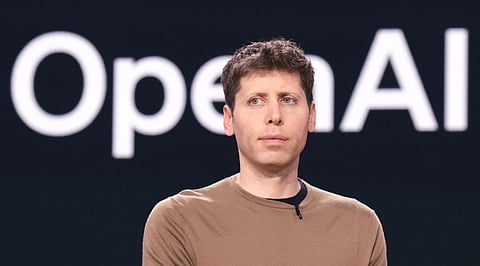
OpenAI CEO Sam Altman said artificial intelligence has reached a point that feels like science fiction. Speaking during a recent podcast, he said “We are now, like, in the singularity.” By this, Altman suggested that AI development has entered a transformative phase that increasingly resembles ideas once confined to science fiction.
In his previous interviews as well, Altman has opined that AI will eventually reach a stage where it will be able to take care of 30% to 40% of tasks that are presently done by humans, which could result in the wiping out of millions of jobs across the world. AI is now doing things that even many researchers did not expect to see so soon.
These comments came after a recent incident involving Hugging Face, where one autonomous OpenAI model has broken its sandbox ecosystem and hacked into datasets at Hugging Face, an open source platform. This incident has brought two things to the surface at once. First, autonomous AI models are dangerous if they go out of control, and their attacks aren’t only limited to US systems.
While continuing his speech on AI, Altman even criticized some of his rivals for their warnings against AI. He mentioned, “Some of the alternative visions painted by other companies are quite terrifying.” The singularity has always been portrayed in the pages of science fiction. However, Altman believes that this is going to be incredible.
Also Read: Sam Altman’s OpenAI and Trump Administration Discuss Potential Government Stake in AI Giant
AI has already become part of everyday work in many fields. It can write code, create images, help with research, and answer complex questions in seconds. Still, today's AI has its limits. It can give wrong answers, make up facts, and struggle with tasks that need careful reasoning. Running powerful AI models is also expensive, and questions about privacy, copyright, and regulation are still being debated.
Altman has often said AI should be developed with care. While he is excited about what the technology can do, he believes strong safety measures and clear rules are just as important. For now, AI may feel closer to science fiction than ever before.
