.png)

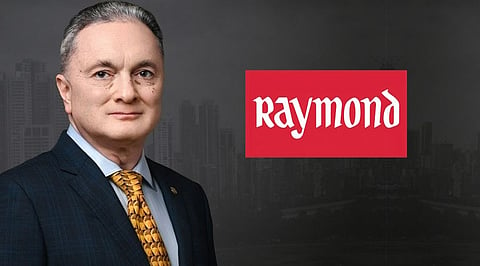
Raymond Group Chairman and Managing Director Gautam Singhania said the group could eventually separate its automotive business from aerospace and defense, but has announced no new demerger. Speaking at the NDTV World Summit 2026 in New Delhi, he discussed the reasons for Raymond’s earlier restructuring, manufacturing plans and uncertain US trade policies. He gave no timeline for another split, leaving the two engineering businesses together for now.
The prospect arose when Singhania faced a question about separating automotive operations from aerospace and defense. He said a division could make sense at a later stage, while ruling out any announcement at the summit. His comments described a possible direction for the group rather than a transaction now under way.
Raymond already operates through three separate business entities covering lifestyle, real estate, aerospace, automotive, and defense. Singhania said this structure gives each company room to build management teams suited to its industry. It also lets the businesses address different operating needs without relying on a single leadership approach.
Singhania left that question open. He described a future separation as sensible at some point but offered no date, company structure, or implementation plan. The existing three-part arrangement remains the only structure he outlined at the summit.
Singhania said the past demerger aimed to give each business more direct oversight. Separate companies can appoint professionals who know their respective markets, while boards can focus on decisions specific to those businesses. Raymond’s lifestyle activities, property business, and engineering operations now sit within different corporate units.
The arrangement also changes how investors approach the group. Rather than holding exposure to each business through one combined company, investors can choose the areas that match their interests. Singhania linked that choice to dividing Raymond into independent entities with distinct responsibilities.
Management incentives formed another part of his explanation. Singhania said each business can tie rewards more closely to its own results. In turn, executives can be evaluated against the performance of the company they lead, instead of that of unrelated operations elsewhere in the group.
He also pointed to succession planning. With separate leadership teams and governance systems, each business can prepare for future management changes on its own terms. The group’s restructuring therefore covers more than its corporate boundaries; it also affects oversight, professional appointments, and the way responsibilities are assigned.
Also Read: Skyroot Vikram-1 Launch Puts Indian Aerospace and Defense Stocks in the Spotlight
Beyond the demerger discussion, Singhania described India’s consumer market as an advantage during global uncertainty. He said domestic consumption accounts for about 85% of Raymond’s business, while exports make up the remaining 15%. Those figures formed the basis of his assessment of the group’s exposure to changes outside India.
Still, he identified rising input costs as a challenge, especially when oil prices increase. He also criticised repeated changes in US tariff policy, saying companies cannot easily stop production, search for other markets and then return to American buyers whenever trade conditions shift. Such changes, he suggested, disrupt the planning that manufacturers require.
In that context, Singhania said companies such as Raymond could seek to supply less to the United States. Europe, he added, may become a more attractive destination. He also said India appeared to be managing wider economic pressures well, despite the uncertainty facing businesses that buy inputs and sell products across borders.
Raymond’s expansion plans also include investment in production capacity. In a separate recent interview, Singhania described plans for a brownfield facility and a larger plant in Andhra Pradesh. He connected future growth in engineering, aerospace and defense to technical capabilities, consistent product quality, and relationships with customers as demand develops.
Gautam Singhania said Raymond could explore another demerger involving its automotive and aerospace and defense operations, but confirmed no present announcement or timetable. He linked the group's existing structure to specialist management, investor choice and succession planning. Manufacturing plans continue as domestic sales support Raymond amid oil costs and US tariff uncertainty.
