.png)

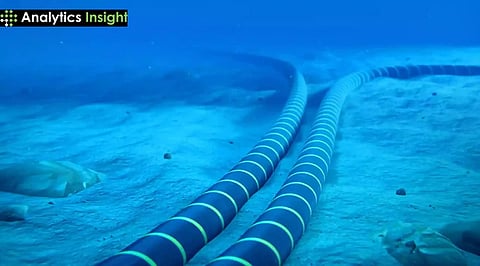
The Strait of Hormuz and the Red Sea carry the backbone of global connectivity called ‘submarine cables.’ These critical routes account for more than 18% of global internet traffic but are now under serious threat as the Middle East conflict escalates.
Most of the internet traffic runs through underwater fiber-optic cables that pass through the Red Sea and the Strait of Hormuz. Currently, both regions are unstable and endangering global connectivity. The active conflict has halted a key cable-laying project in the Gulf, leaving critical infrastructure unfinished and exposed.
According to industry reports, multiple cable cuts have hit the Red Sea since 2024. In one instance, a damaged ship dragged its anchor and snapped several cables at once, disrupting internet services between Asia and Europe.
Another incident in 2025 slowed internet speeds across countries like India, the UAE, and Saudi Arabia. Undersea cables are difficult to repair, and in active war zones, they may be delayed until the situation stabilizes.
The Persian Gulf could act as a safer alternative. A massive cable project was nearly complete and ready to ease pressure from the Red Sea route. However, the war has hampered progress, leaving existing cables to carry the full load. With mines placed in shallow waters and constant military activity, even a small incident could damage these cables and cause disruptions.
The damage extends beyond slow internet. Banks, hospitals, cloud systems, and global businesses rely on these connections. If both routes fail, companies could face massive losses, as important transactions may be interrupted. Traffic could be redirected to longer routes, but this might slow services down, frustrating users. While a satellite backup exists, it cannot handle large-scale data flow.
Also Read: US Stock Market Today: Wall Street Edges Higher, Oil Drops as Trump Delays Iran Strikes
The Internet is a global communication system that connects millions of users and businesses. It is built for efficiency. However, with war looming above this crucial infrastructure, it shifts from being a reliable digital lifeline to a vulnerability. While the US and Iran may have agreed to a 5-day pause, the broader threat to internet infrastructure remains.
