.png)

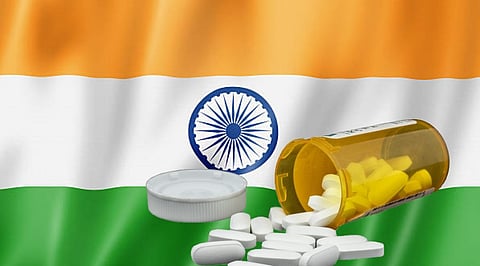
Indian pharmaceutical stocks declined on Wednesday after US President Donald Trump announced a phased tariff plan on imported generic medicines. The proposed policy caused concerns that in the long term, Indian pharma companies that rely heavily on the US market may not be profitable.
The Nifty Pharma index declined around 2% in early trade and all the stocks in it were in the red. Aurobindo Pharma fell 3.48% to Rs. 1,525.50, while Lupin declined 3.46% to Rs. 2,427.90 and Cipla dipped 1.51% to Rs. 1,410.90. Sun Pharmaceutical Industries edged lower by 0.98% to Rs. 1,944, while Dr. Reddy's Laboratories fell 1.33% to Rs. 1,190.
Other big losers included Gland Pharma, Ajanta Pharma, Sai Life Sciences, Zydus Lifesciences, Piramal Pharma, Alkem Laboratories and Glenmark Pharmaceuticals.
In a post on Truth Social, Trump wrote that all generic drugs being brought into the US will have no tariffs for two years. As announced, the tariff will increase to 100% from August 1, 2028, then to 200% from August 1, 2029.
The plan is designed to promote pharmaceutical industry investment in the United States. Companies that fail to adjust their supply chains during the transition period could face higher import costs.
The policy focuses on generic drugs, and the current tariff regime for patented, branded and innovative drugs will remain unaffected.
The US is one of the largest markets for Indian pharmaceutical companies. According to IQVIA data, Indian firms have approximately a 47% stake in the generic drug market in the US. Nearly 90% of prescriptions dispensed in the country are also for generic medicines.
Sunny Agrawal, Head of Fundamental Research at SBI Securities, said, “While the proposed structure provides a two-year transition window before tariffs increase sharply, shifting generic drug manufacturing to the US remains challenging.”
Agrawal says that it is estimated that medicines is produced around 30%-50% cheaper in India compared to the US.
The tariff suggested would be applicable to the cost at which medicines would be imported to the US and not the final retail price, according to Tushar Manudhane, an analyst at Motilal Oswal Financial Services.
“Nearly 90% of generic prescriptions in the US are imported, effectively increasing tariffs for all suppliers to the US market,” Manudhane said.
Also Read: Trump’s Generic Drug Tariffs May Hit India’s Pharma Exports Hard
Granules India is considered among the most exposed companies, with approximately 74% of its revenue linked to the US. Marksans Pharma earns over 50% of its business from the market, whereas Lupin, Glenmark and Zydus earn about 40%.
Sun Pharma and Ajanta Pharma have less than 30% of their revenue from the US, compared to Cipla, which is about 25%.
The companies that have manufacturing facilities in the US and diversified revenue streams and exposure to complex generics or specialty medicines will be better equipped, according to analysts. The ultimate effect, however, will depend on what the final tariff design will be, what exemptions are in place, and whether companies will be able to shift the higher cost onto US customers.
