.png)

Google is taking another step towards its ambitious plan to move AI computing beyond Earth. The company has selected Jeff Bezos-owned Blue Origin to launch a group of AI-powered satellites in 2029, marking an important milestone in its efforts to explore space-based data centres.
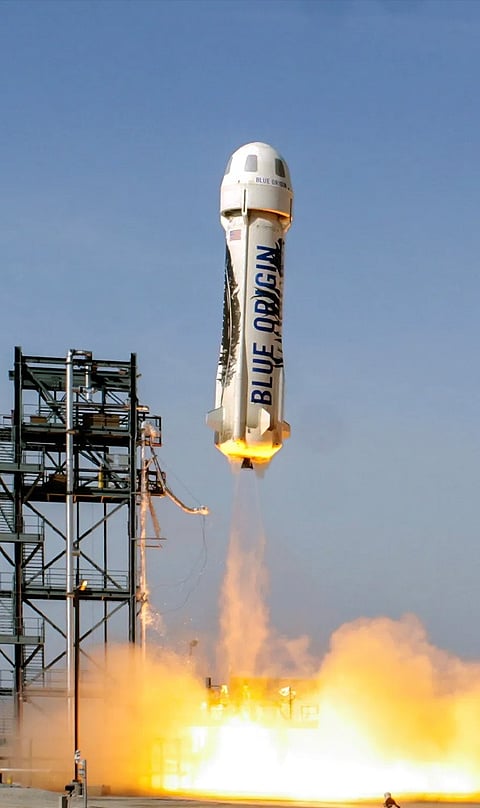
The mission is part of Project Suncatcher, Google's research initiative focused on using solar-powered satellites to run artificial intelligence workloads in orbit. According to the announcement on November 19, Blue Origin's New Glenn rocket will carry the satellites into space during the first quarter of 2029.
Each satellite will be equipped with Google's Tensor Processing Units (TPUs), the company's own chips designed to handle AI workloads. Google says the computing capacity of an individual satellite will be roughly equivalent to a rack of servers inside a conventional data centre. The satellites will operate in an orbit that provides access to near-continuous sunlight.
The idea behind the project is fairly straightforward: AI systems require enormous computing power, and traditional data centres consume significant amounts of electricity while also needing extensive cooling infrastructure. Google wants to find out whether solar energy in space could offer another way to support growing AI demand.
This isn't Google's first attempt to test the concept. In October, the company worked with satellite manufacturer Planet Labs to launch an initial Project Suncatcher prototype aboard a SpaceX rocket. The mission is designed to examine how Google's chips perform under space conditions, including radiation, extreme temperatures and the physical stress of launch.
Also Read: SpaceX Drops Below IPO Opening Price as Rival Blue Origin Expands Space Ambitions
Blue Origin's involvement gives the project a dedicated heavy-lift launch vehicle for its next major phase. The agreement also provides the company with an important future mission as it continues expanding its commercial launch business.
However, building data centres in orbit won't be easy. Engineers still need to address challenges involving heat management, radiation protection, launch expenses and satellite production. For now, Project Suncatcher remains an experiment rather than a ready-to-use commercial service.
The 2029 mission should give Google a better understanding of whether space-based computing can become a practical option as demand for AI infrastructure continues to grow.