.png)

Former Commodity Futures Trading Commission (CFTC) Chairman Chris Giancarlo says Democrats could rewrite the CLARITY Act after taking control of Congress and challenge President Donald Trump to reject their version of the crypto legislation.
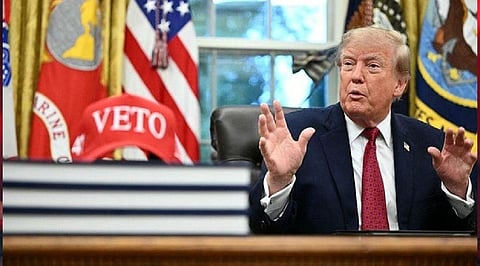
In a November 11 interview with Bitcoin Magazine, Giancarlo described a possible strategy in which Democrats retain much of the existing bill while adding their own rules. “We dare you to veto it,” he said, outlining the challenge lawmakers could present to Trump.
Giancarlo said he had heard that Representative Maxine Waters wanted to preserve roughly 80% of the current CLARITY Act and replace the remaining 20% with Democratic priorities. However, his comments described a possible approach rather than an agreement among lawmakers. Waters has not publicly released a revised bill containing that split.
House Democrats have already discussed expanding Waters' Crypto Investor and Consumer Bill of Rights into new market structure legislation. The proposal could give the Securities and Exchange Commission (SEC) more authority while reducing the CFTC's responsibilities over digital assets.
Waters proposed consumer protections during the House's 2025 debate on the CLARITY Act. They covered customer support, asset custody, withdrawal rights and monthly reserve reporting. However, the House Rules Committee voted 4-8 against allowing that amendment to reach the floor.
Giancarlo said Democrats may focus their objections on Trump's family cryptocurrency businesses rather than pursue broad restrictions on the industry. He suggested lawmakers could pass legislation containing tougher ethics provisions and challenge the president to approve it.
However, Giancarlo warned that negotiations could introduce unrelated measures, including proposals concerning credit card fees. He said Trump could then argue that the legislation had moved beyond cryptocurrency regulation and veto it.
Senator Elizabeth Warren previously called for a bipartisan alternative, opposing the existing bill over consumer protection, economic stability and national security concerns. Any Democratic replacement would still require Trump's signature or enough congressional votes to override a veto.
The November midterm elections gave Democrats control of both chambers beginning January 3, 2027. Waters is expected to lead the House Financial Services Committee, while Warren could chair Senate Banking. Formal committee leadership assignments remain pending.
The House passed the CLARITY Act by 294-134 in July 2025. However, the Senate rejected a procedural motion to advance it on September 15, 2026, by 49-50, short of the required 60 votes. Senator Thom Tillis subsequently filed a motion to reconsider, leaving another vote possible.
The bill would establish a framework for crypto trading, dividing oversight between the SEC and CFTC. Giancarlo described their jurisdictional dispute as being “less about good regulation and more about turf.” He also praised cooperation between SEC Chairman Paul Atkins and CFTC Chairman Michael Selig.
Moreover, Giancarlo called for full bipartisan commissions at both agencies, saying regulators benefit from different viewpoints when developing rules. “I'm a big believer in a full commission structure,” he said.
Meanwhile, negotiations to revive the CLARITY Act remain unresolved. Congress could reconsider the legislation before its term ends on January 3. If lawmakers fail to pass it, the next Congress would need to introduce new legislation and restart the approval process.
ALSO READ: Ripple’s XRP Ledger Lending Protocol Nears Launch as Validator Support Rises to 23 Votes