.png)

California voters have approved Proposition 42, a constitutional amendment restricting new state taxes on crypto holdings, stocks and personal assets. The measure passed with 51% support in the November 3 election, while voters rejected a billionaire tax.
The Associated Press called Proposition 42 on November 13. California will continue counting ballots before certifying results in December.
The California Secretary of State’s official ballot guide says Proposition 42 prevents the state from creating new taxes based solely on ownership of personal property. That includes digital assets, securities, retirement accounts, business interests and intellectual property. Real estate falls outside the definition.
The amendment also limits retroactive state taxes on past activities or circumstances. It applies to taxes enacted or taking effect from January 1, 2026. Existing taxes remain in place, and the restrictions include exceptions for certain emergencies.
For cryptocurrency investors, the measure prevents California from introducing a new tax simply because someone holds Bitcoin or other tokens. It also covers financial assets whose value has increased but which an owner has not sold.
The state legislative analyst said the ban reduces future options for raising revenue. However, the office said the amount of revenue the state might forgo remains uncertain.
Proposition 42 does not remove California’s existing taxes on investment income. Residents who realize taxable gains from selling cryptocurrency remain subject to applicable state income taxes. Federal requirements for digital asset transactions also continue unchanged.
The Internal Revenue Service treats digital assets as property for federal income tax purposes. Selling Bitcoin for cash or exchanging one cryptocurrency for another can create taxable gains or losses. Income from mining, staking or payments may also be taxable, depending on the transaction.
The new restriction targets state taxes on ownership rather than taxes on profits or income. California already taxes income from investments, but generally does not impose a separate tax merely for owning stocks or other financial assets.
Likewise, the amendment does not eliminate existing property-related charges, including vehicle license fees and local taxes on certain business equipment. It limits new state levies rather than abolishing those previously authorized.
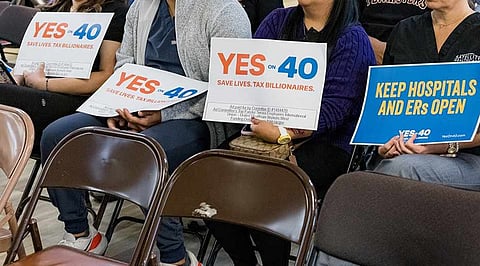
In the same election, voters defeated Proposition 40, a proposal to impose a one-time tax of up to 5% on taxpayers with covered assets worth more than USD 1 billion. About 52% voted against it, according to preliminary election results.
State ballot documents said the proposal would have directed 90% of the proceeds toward health care, with the remainder allocated to food assistance, education and administration. Proposition 42 contained provisions that could have blocked Proposition 40 if both had passed.
Google co-founder Sergey Brin supported the campaign opposing the billionaire tax and backing Proposition 42. Labor groups and supporters of Proposition 40 argued that a wealth tax would raise money for public services.
Brian Marvel, president of the Peace Officers Research Association of California, welcomed the Proposition 42 result. ‘Prop 42 gives our members, and every Californian, the security of knowing their retirement will be there when they need it,' he said in a campaign statement.
Supporters of the failed billionaire tax have discussed proposing another measure in 2028. Any future tax would need to comply with the constitutional restrictions or seek voter approval to change them.
ALSO READ: Strategy and Strive Signal Bitcoin Buying Interest as MARA Sells USD 1.1 Billion